Tuesday, June 4, 2013

Mzimba is Malawi by Mistake - Dr Bofomo

Key issues
  • Parliament passes land bill saying all land in Malawi belongs to government
  • Dr. Bofomo says that is out of order as Mzimba has always never been Malawi
  • Mzimba is Malawi's biggest district

Member of Parliament for Mzimba Liwelezi, Dr Bofomo Nyirenda says the land in Mzimba district does not belong to the republic of Malawi as the new Land Act states but rather to the people of Mzimba who are not part of Malawi but just development partners.

Nyirenda initially raised the issue in parliament on Friday as part of debate on the Land Bill that was being tabled. His concern was brushed aside as not serious by the leader of the house Henry Phoya and the Bill was passed.

But Nyirenda  did not take the issue lightly and he stormed my office in Lilongwe where he reiterated his stand saying the Land Act is out of order by claiming in Sections 10 and 12 that “All land [in Malawi]belongs to the Republic.”

“Mzimba is part of Malawi by mistake...Mbelwa Administrative Council was...an independent kingdom neighbouring Northern Rhodesia and Nyasaland. Nyasaland was colonized in 1895 by the British and Mzimba was not.

“Mzimba was persuaded by the Queen to work as development partners with Nyasaland...and it was agreed that Mzimba would reclaim its independence from Britain after enough people from there were educated,” wrote Nyirenda in a speech addressed to the speaker of parliament.

Nyirenda explained that before Mzimba could get independent, Kamuzu Banda persuaded the then chief, Inkosi ya Makosi Mbelwa 2 to help him fight the federation and was told that afterwards Mzimba would get independent failing which Mbelwa would become king of all Malawi and Banda would be his prime minister.

“In fact... the name of this country should have been 'Republic of Malawi + Mbelwa Kingdom' because Mzimba is only a partner in development. Hence the land of Mzimba belongs to Mbelwa and his chiefs and their subjects and not to the republic of Malawi.” Said Nyirenda.

He said the people of Mzimba still remember that the relationship between them and Malawi is that if development partners and as such “all land belongs to the Republic except the land of Mzimba.”

Diagnosis? Bofomo is right, i have read about this before, its why Mzimba has no district council but rather a "Mbelwa District Council" and its only district with a chief in the name of a district council, why? because Mzimba was a kingdom.


Malawi insists South Korea knows of the labour export deal

It is Embarrassing. The Malawi government has shortlisted, interviewed and identified the 100,000 Malawians it wanted to send to South Korea, but South Korea says it doesn't know of any incoming Malawians.

Moon Sung Hwan, director at the Africa Division of South Korea's foreign affairs ministry told Bloomberg BusinessWeek that his government has not received any official request from Malawi on the issue.

The Koreans were reacting to a BBC story in which the minister of labour Eunice Makangala confirmed that there is a deal between the two countries, a deal which would see a 100,000 young Malawians being exported to Korea as migrant workers.

But the Malawi government Spokesperson, minister of information and Member of Parliament for Blantyre south, Moses Kunkuyu, insist there is a deal.

“The president travelled to South Korea, so did minister of labour. We did the advertising, the shortlisting and the interviewing. All these processes could not have happened without a basis. The president could not have launched this and said what she said.

“As for the comments from the said South Korean official, the do not come as a surprise. Locally people have been making noise saying South Korea is a war zone, that it treats immigrants as slaves, if Malawi was importing labour and someone said we were bad what would we do?” said Kunkuyu.

There have been media reports criticising the deal by highlighting the Amnesty International report which alleged that migrant workers in South Korea are treated like slaves, opposition MPs have also doubted the deal and dubbed it slavery.

Kunkuyu said Malawi is going ahead to prepare the people for the exercise. He said tomorrow people expected to be sent to Kuwait on a similar exercise are going to start orientations and those going to Dubai will follow.

President Joyce Banda's Spokesperson, Steven Nhlane, when asked in an email interview to explain the discrepancy in Joyce Banda's statements and those coming from South Korea referred me to a David Yun, at the Malawi Honorary Consul General to South Korea. Nhlane said Yun is the one who has been facilitating the deal.

I could not manage to get hold of the said Yun.

My theory? Seoul knows of the deal but hates the bad publicity. My verdict: let the youths go to Korea, they are better slaves there than in Malawi, without jobs.

Did you know they are now looking for graduates? South Korea rocks!

xo xo

Muta

“Form four drop outs should not be ministers”

Speaker of Parliament Henry Chimunthu Banda on Friday ruled out of order Member of Parliament for Nsanje Central Francis Kasaila who dressed down  minister of tourism Rachel Zulu calling her a “form four drop out” and suggested that time had come for the cabinet to only have people with higher qualifications.

Chimunthu Banda brought back the issue from Tuesday where minister of tourism, in an altercation over the Nsanje Port's progress with Kasaila, told the presiding speaker that she wanted to “educate” Kasaila who instantly countered with the remark that sent the house into chaos.

“Madam deputy speaker, it is naive for somebody, a form four drop out, to say that she can educate a graduate, it is naive, I think it's high time that those who are appointed to cabinet should be people with high qualifications,” said Kasaila as quoted by the Hansard.

Deputy leader of the house Anita Kalinde pitched a point of order amidst insults issued in vernacular and general higgledy piggledy and she faulted Kasaila for “demeaning” the minister and for mentioning high qualifications as a condition for attaining a ministerial post which was against the constitution.

Kasaila was also accused of practicing chauvinism and disrespecting the deputy speaker on account of her gender. He refused to withdraw the remarks as requested and said he would only do that after he saw the Hansard to see if he was indeed being mean to Malawian women.

Chimunthu Banda in delivering a ruling faulted Nsanje Central for use of unparliamentarily language  contrary to standing order number 85 (3B and D).

“Although this is the opinion of the honourable member which he is indeed entitled to but we should be aware of section 94 of the republican which stipulates that it is the prerogative of the president to appoint any person into cabinet as long as the person is citizen of the republic of Malawi and he or she is able to speak and read the English language,” said Chimunthu Banda.

When Nsanje Central was thus promptly asked to withdraw his remarks having being found guilty and this time, he promptly did, within five seconds of being asked to do so.

Chimunthu however also faulted the minister of tourism saying her saying she wanted to “educate” Kasaila was unfortunate.

CHAM partners with CDC to better the Malawi HIV/AIDS response

The Christian Health Association of Malawi (CHAM) says it is on course in its efforts to improve HIV services in church owned hospitals in Malawi under its HIV/Aids capacity building programme.
CHAM Executive Director Rose Ng’oma speaking in an exclusive interview on Thursday said the programme is and will make a difference in the delivery of HIV services in the CHAM hospitals that are benefiting from the programme.
The five- year Programme, bankrolled by the America’s Centres for Disease Control and Prevention (CDC), started in 2009 has supported the development of infrastructure and the provision of health related scholarships to Malawians. So far over $4 million has been given to CHAM.
“We have a sub-granting mechanism which allows CHAM Secretariat to provide grants to CHAM hospitals so that they improve their infrastructure and technical know-how. Through this arrangement we have managed to support 20 hospitals.
“One of our major hospitals, Mlambe, was given a grant to install improved laboratory systems. Mlambe is one of the big hospitals in Blantyre which provides service to not less than 50,000 people and it is also a referral hospital,” said Ng’oma.
Ng’oma said under the grant Mlambe Hospital purchased HIV test kits and CD4 Count machines, motor bikes and bicycles and computers to improve data management, diagnosis and community outreach programmes.
She said the positioning of the hospital will enable students from the Colleges of medicine, nursing and health sciences in Blantyre and Thyolo to easily use the new and modernised laboratory equipment in their training.
“We have also have used part of the grant to improve HIV Care Clinic at the hospital, initially it was small and had no privacy for clients. We now have a shelter for HTC and ART service delivery which has improved services there,” she said.
CHAM’s manager for the programme, Dyson Telela, said the programme has also seen 947 students getting full scholarships to train as medical assistants, lab technicians, clinical officers and nurse and midwife technicians. 
16 of the lot are Tutors from the training colleges who are now upgrading their qualifications to Masters Degree at Kamuzu College of Nursing.
The training colleges have also received computers and books in addition to the scholarships as part of capacity building programme.
Some of the 20 hospitals benefiting under the programme include David Gordon Memorial, Mzambazi, Namasalima, Mulanje Mission, Montfort, Trinity, St Annes, Likuni, Mlale and Kaundu.
CHAM provides 40 percent of healthcare in Malawi and has MOU with government in which critical services such as HIV services are provided free of charge.

“We would like to thank the US government; their support came at a right time. A lot of people are benefiting, the HIV services have improved in the catchment areas of these CHAM hospitals,” said Ng’oma.

Police raptured my Appendix – man

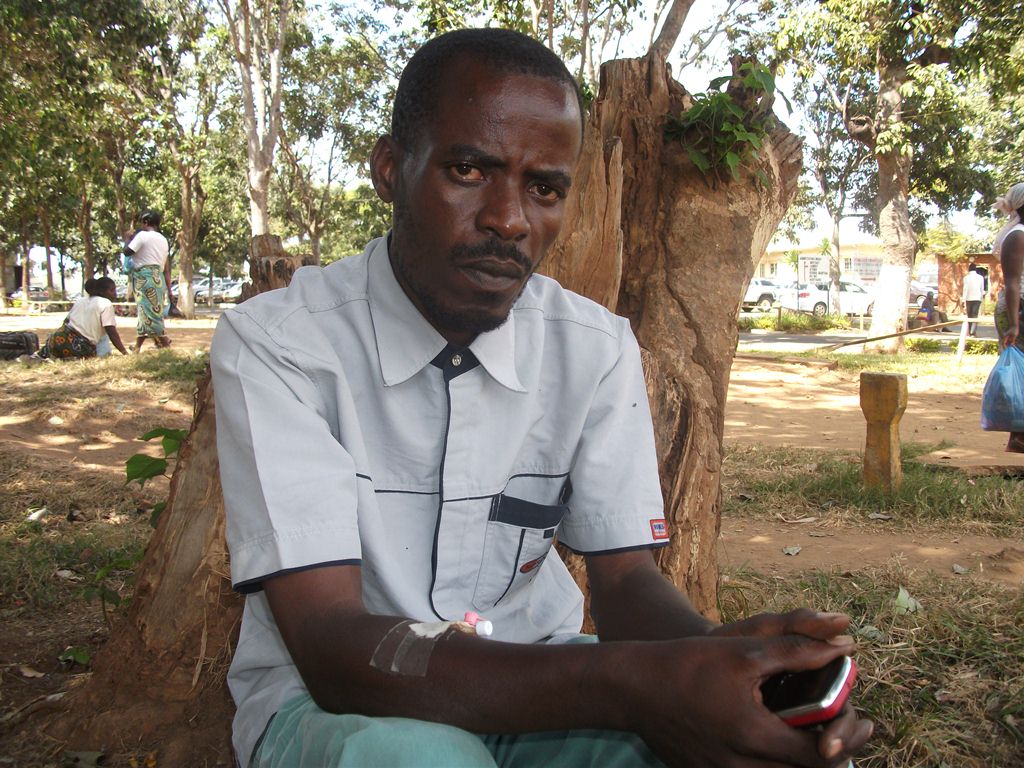
A Nkhota-kota man claims police from the district beat him up and ruptured his appendix after he had criticised their “failed” status in providing security and containing vandalism in the district.

Takondwa Phillipo, 39, an employee with a microloan organisation in the district, said he decided to advise police on some of the security areas in the area after noticing wanton vandalism that has seen railings at Bua River reportedly disappear.
I need legal guidance - Phillipo

“I was playing pool with police Oliver Mwabumba, the Officer in Charge (OC) at Nkhota-kota police at a bar and I was telling him about things that I have been noticing such as the stealing of railings from the bridges. I concluded by telling him that his office was incompetent,” said Phillipo. He was speaking from Kamuzu Central Hospital in Lilongwe where he has been freshly operated on.

After he told him that, Phillipo said the OC officer stepped aside and make a phone call and mentioned “an operation.”

Phillipo said after he changed bars, three police officers stormed the bar he was patronising and the police demanded that the bar be closed. And when he argued with the police that the bars license allowed operation up to midnight, the policemen arrested him saying he was obstructing them in their duties.

“They took me outside and started beating me with their leather boots, they hit me from all directions and I kept falling and staggering since they had cuffed my hands. They then told me to go to the station and I slept in a cell there despite me asking for medical attention.”

Phillipo was given bail the next afternoon and three days later, Phillipo collapsed in his house and after being rushed to the Nkhota-kota district hospital they diagnosed him with imminent or certain appendix rapture. He was rushed to Kamuzu Central Hospital where his appendix was removed on 17 May.

“All that was to silence me for pointing out the truth…I am a layman and I am yet to be advised on what to do about this issue,” said Phillipo.

Nkhota-kota Police Officer in Charge, Lovemore Mwabumba rubbished Phillipo’s claims when contacted in a phone interview saying Phillipo was arrested after midnight, heavily drunk and he came to the police station cursing.

He admitted playing pool with Phillipo but said it was early in the night and denied sanctioning a hit on him.

“Maybe he uses hemp. We have talked to the arresting officers and police on duty and nothing like that was reported. Why did he rush to the media, why not report this to our regional office? Am very saddened and shocked about this,” said Mwabumba.

Malawi: Land Law Passed Amid Protest

Key Issues:
  • Foreigners can only get land if they partner with local
  • Foreigners who have freehold land but don't get citizenship within 7 years will see it converted to leasehold
  • Chiefs no longer have sole say over land - Village committees will instead be the new authority
  • Opposition say the bill is too complex and has been rushed
  • NGOs say it still ignores women
  • Read the story, don't be lazy and not just want everything summarized!

Parliament on Friday finally passed into law the controversial land bill which government says will check land related malpractices in the country; the opposition however says the bill has been rushed.

Democratic Progressive Party spokesperson, Nicholas Dausi said the bill has been rushed because there are complex areas in the bill that need explaining and clarification.

“…chiefs and village headmen have raised few questions saying on the issue of public land, private land, acquisition of land have to be detailed clearly. The issue of land tribunals, do our traditional leaders understand clearly or is it made to take away their traditional inherent powers over customary land?

“We thought the bill should be referred back to the relevant committee, that is the legal affairs committee, so that these issues should be re-looked into because any Act, any law of a country it concerns should be understood better by that country’s citizens than anybody else. So I think there are more questions to the land bill than answers,” said Dausi.

But minister of lands and housing who is also leader of the house Henry Phoya in an interview after the session that passed the bills, played down the fears by the bills critics saying the land bill was just a general bill and that upcoming bills such as customary law bill will explain some issues better.

“Chiefs will no longer be able to make unilateral decisions insofar as allocations of land are concerned we will have to have village committees. So what has been the case in the past whereby villagers would just see someone, a foreigner, laying claim to a piece of land will be a thing of the past,” said Phoya.

Asked about the gender inequality that the bill has been accused of sustaining, Phoya said the allegations are untrue as the bill grants equal access to both male and females.

On the concerns of corruption by land ministry officials, Phoya said government set to strengthening the land management issues in the land related bills to close loopholes that allow for corruption.

Kezzie Msukwa, Chairperson of Legal Affairs Committee of Parliament supported the bill saying the bill will now make it hard for foreigners to acquire land as the Act  requires that foreigners partner with Malawians if they want to buy land.

The freehold land being held by foreigners also dominated and divided parliamentarians during the debate on the bill. Some even alleged that all the prime land in Malawi is being held by foreigners under this schedule.

“The bill addresses that issue directly, it states that when a foreigner has freehold title over a piece of land and he does not obtain Malawian citizenship within a period of 7 years from the time of enactment of this law, that land shall be converted to leasehold,” said Phoya.

ActionAid Malawi Women’s Rights Coordinator, Wezi Moyo speaking at a recent a workshop organised for women farmers to discuss land related bills said the bill would heavily disempower women.

“This bill is going to disempower women in big way, it is carrying over the problems that are in the customary land system of land distribution which does don't accord women equal rights to access and control of land for example the bill is talking about redistributing the land and registration when women don't have the land, how are women going to register land if they don't own it?
Malawi soil: out of reach of foreigners, women


Justin Dzonzi, human rights lawyer and legal consultant added his worry on the new bill saying the bill is useless if it doesn't abolish or address the customary law first.


“…it says every person with customary land can register it in his or her name or in joint names as a unit, now imagine a husband and wife who jointly own land in a patrilineal set up and the husband dies, what happens to the land? The bill says administration of the law will be according to customary law which in this case means that the wife cannot have that land,” said Dzonzi.

Monday, June 3, 2013

Roger Federer building 80 schools in Malawi

The Roger Federer Foundation (RFF), the charity of second seed tennis Icon Roger Federer, says it is impressed with the progress of the early childhood development programme it funds via ActionAid Malawi which will see 80 schools built across Malawi.

RFF Chief Executive Officer Janine Handel said this at the conclusion of her tour of the school building project which took her to Mchinji, Rumphi and Ntchisi.

“it was a pleasure to be here after two years since the beginning of the initiative when I visited Rumphi and there is so much progress you can see here, there are four structures (in Rumphi) almost finished, we have a very committed community…” said Handel.

One of the schools, this one is in Rumphi, Bumba

ActionAid Malawi Country Director, Martha Khonje, said the RFF funded and engaged her organisation which will see 80 early childhood development centres erected in the next eight years and will benefit about 54,0000 children below the age of six.

“The programme is comprehensive in nature and will construct 80 model community based child care centres, strengthen the capacity of parents, caregivers and management committees and support the creation of a smooth transition for children from the ECD centre into primary school,” said Khonje.

Khonje revealed that so far 20 of the said schools have been constructed and a number of caregivers to match trained. She called on government and Non-governmental organisations to join the programme to ensure that the 62 percent of children that are legible but not being reached by ECD initiatives.

Roger Federer injected an initial $3.3 million which has since swelled to $7 million. The model schools come with about 5 rooms an independent kitchen and a set of child friendly pit latrines and a house for a caregiver.
Handel said Federer has a keen interest in children of Africa because he has his children in the same level and said his South African roots make him feel connected to the children of the continent.

Handel however warned that impressive infrastructure should not be the end but rather the beginning of the early childhood development efforts, a message she spelt to chiefs, parents and officials in the districts she visited.

Handel (obvious) jives with Malawian women at Bumba, Rumphi
“Now that our structures are at the stage of having opening ceremonies, our work has just started. There is a long way ahead of us. Now comes the questions: how can we train caregivers? How can we keep them on board and motivate them? How can we make sure that the children are performing better?

I have seen today that there is still some work to do there, but the next phase we will need  to concentrate on that issue in particular we need to concentrate on the whole structure , the whole care giver training, the resources  so that they have a sustainable way to be maintained,” said Handel.

She called on communities to seriously look into sustainability of the programme and called on government to dig deeper to fully roll out the programme so that every Malawian child goes to preschool.

Traditional Authority Kasakula of Ntchisi and Senior Acting Principal Kawazamawe of Chirambo in Rumphi whose areas have benefited from the programme  all said they are committed to seeing the programme in the future and they said their commitment is evident in the fact they provided sand, bricks and labour for the construction of the centres.

Minister of Gender, Children and Social Welfare, Anita Kalinde ,speaking on the sidelines of the launch of the ECD Programme by ActionAid in Ntchisi, hailed the initiative and  said government is also racing to renovate existing ECD centres to broaden its reach.

ActionAid board chair person, Gillian Kambwiri said the 80 schools under the ECD programme will be distributed in 6 districts in Malawi some being Chitipa, Nsanje Ntchisi and Mchinji.


“We at ActionAid believe that education is the key to ending poverty and if we start offering education to children, Malawi’s future might be brighter,” she said.

Before You Suck: The Oral sex - Cancer Link

It is an open secret: more couples are partaking in oral sex. That is both fellatio and cunnilingus, which is where couples orally stimulate each other’s erotic zones. Its dope and already its being described as the new "good night kiss."

Oral sex has come to be popular with those that don’t want to risk getting pregnant; those that have premature ejaculation issues also try to use cunnilingus to help their partners get an orgasm – at least. Some are just copycats of Hollywood.

At least 54 percent of teenage girls in America are reported to have had oral sex and the trends keep going up with each new poll. In Malawi, in the university corridors and the middle class neighbourhoods where youths almost behave like Americans, the picture is likely to be the same.

As oral sex becomes the new goodnight kiss, there is a gloomy picture coming into the horizon: people who partake in oral sex are almost nine times likely to get oropharyngeal cancer, that is cancer of the mouth or throat.

Time Magazine reported on a May 2007 Survey  by the New England Journal of Medicine (NEJM) which showed that men and women who reported having six or more oral-sex partners during their lifetime had a nearly ninefold increased risk of developing cancer of the tonsils or at the base of the tongue.

Dr Beatrice Mwagomba is the Program Manager for Non-Communicable Diseases & Mental Health in the Ministry of Health. I asked her if at all there is a cancer risk in oral sex.

“Yes, there is documented evidence on association between oral sex and cancer of the mouth or throat but not necessarily a cause-effect relationship.

“... [this happens] through the transmission [during oral sex] of a human papilloma virus (HPV) which is also strongly associated with cervical cancer and genital warts,” said Mwagomba in an email interview.

Now that is some serious bad news. What would modern sex be without oral sex?  How serious and widespread is this HPV anyway?

Well, The Centres for Disease Control and Prevention approximates that 80 percent of women in the U.S. have been exposed to the virus by age 50; an estimate that some researchers think is low. As for men, the figure is likely to be higher since they easily get infected by HPV.

Men’s Journal Magazine reported last year that rates of HPV-related throat cancer had risen 225 percent in the previous 16 years in the USA, with men suffering the most cases. Researchers pointed to the increasing popularity of oral sex as the cause if the rise.

The HPV was commonly known as the cause of cervical cancers, but with new studies, it appears men are as much at risk as women. There is a vaccine for HPV but it is not clear if the cervical cancer vaccine can be used on men too.

There is little one can do to prevent HPV infection, most carriers have no symptoms and once infected the body can purge the virus naturally if you are lucky, otherwise, behaviour change is the prevention.

Sex might not be the same again without oral sex but not all hope is lost if you are a black person: A 2009 study found that white men are almost nine times as likely as black men to suffer HPV-related oral cancers. That is a big enough excuse to go down on her tonight – if you are black!


Sunday, June 2, 2013

Jesus had a wife who is also his mum?

The World Mission Society Church of God now boasts of churches 150 countries including Malawi. Not many, however, know that the church believes that Jesus already returned and that there is a “God the mother” apart from the father and son. I went to explore the church’s dogma for you.

The World Mission Society Church of God (WMSCG) is well known by its trademark volunteer acts which include cleaning streets and hospitals. The church was found by   Ahn Sahng-hong in 1964 and since then has spread to many countries with the church now boasting of about 2 million baptized members.

There is nothing strange about a church being Korean, nor is there anything new in its volunteer and charity drives – all churches do that. It is the dogma the church teaches and believes in that is interestingly unique.

I tracked down the church’s Lilongwe based pastor, Evance Kandodo, to help us understand what the church stands for but rather surprisingly, Kandodo said he had sought permission from headquarters and HQ had told him not to take my questions.

The church however has tried to list some of its philosophy on its website www.english.watv.org.

God the Mother

It has always been known to the average Christian that there is a Trinity which consists of God the father, god the son (Jesus) and the Holy Spirit. This is for the Catholics and most Protestants, for the WMSCG, there is God the Mother somewhere.

Alert! You are going to get convinced: The church argues that since man (men and women) were created in the image of the Gods that sat at the beginning of Genesis, there has to be a female God to account for women.

The churches argument from Genesis 1: 26-27 which says:  “Then God said, "Let us make man in our image, in our likeness...” So God created man in his own image, in the image of God he created him; male and female he created them.”

“Some say that the word “us” in this verse indicates God the Father, God the Son, and God the Holy Spirit. If this argument is correct, there should be three types of people in the world—those who were made in the image of God the Father, those who resemble the image of God the Son, and those created in the image of the Holy Spirit.

“However, on this earth there are only two types of people: men and women. Therefore, the “Gods” mentioned in Genesis 1:26 are the male image of God and the female image of God—God the Father and God the Mother,” argues the church.

Well, there sure is nothing on earth that looks like the Holy Spirit so maybe this is true. But then it goes one further. The church uses Romans 5:14 to get to the conclusion that God’s intent in creating Adam was to reveal the Second Coming Jesus (heavenly Father) and thus Eve was created to reveal the Second Coming Jesus’ wife (heavenly Mother.)

Romans 5:14 describes Adam as the figure of whom is to come. And the literal translation of the name Eve means “life” and the church calls her the “mother of all the living”

“In other words, just as Eve was called “the mother of all the living,” we can only be given eternal life through our heavenly Mother. Eve represents our heavenly Mother,” says the church.

Christ returned and went back to heaven!

All these are very convincing arguments and the church did not stop there, it says the church’s founder Ahn Sahng-hong is the Christ. If you like: Christ came again and he died again, of course to the church, he went to heaven to fulfil other duties as prophecy requires of him.

Before Ahn Sahng-hong went to heaven, or died, he revealed The God Mother, yes God is alive and is in Korea and people can actually touch her. Her name is Zhang Gil-Jah, the current leader of the church. Some believers actually report that they had a spiritual encounter when they embraced her.

The church says Jesus could have given humans life if he wanted when he came about 2000 years ago but he waited, the church says, because life can only be given by the Heavenly Mother, who they say is the one being referred to on Galatians. 4:26.

“In this last age, we need our Jerusalem Mother who has been established by Christ Ahnsahnghong the Second Coming Jesus. Let us believe in Christ Ahnsahnghong, the Holy Spirit, and in Jerusalem Mother, the Bride, so that we can receive eternal life.”

Opposition

Naturally a church preaching such revolutionary teachings had potential to cause wars in the days of the early church. Today the church’s opposition is chiefly bloggers and leading the pack is www.examiningthewmscog.com which has some works written by former members of the church.

The website claims Ahnsahnghong actually wrote against the idea of a mother god. It also says the church misinterprets Galatians for its own schemes. It argues that Paul was referring to Sarah and Hagar when he wrote about heavenly city of Jerusalem which the church says refers to the mother god.

Another reader of the blog commenting on the critical website said the idea of a mother god is wrong because it means that God cheated on his wife to impregnate Mary. He continued to say that if Jesus is the son of God and yet wife of the heavenly mother, it means the trinity partook in incest which is not God-like.


Is Ahnsahnghong Jesus? Is Zhang Gil-Jah God? Was She Ahnsahnghong’s wife? Did Ahnsahnghong go back to heaven? Was he the same guy as the Jesus of 2000 years ago? Not easy questions.

Thursday, May 23, 2013

First ever Rehab opens in Malawi


Alcoholism just got its first real challenge - StJohn of God (SJOG)

in Mzuzu has established the first ever addiction recovery centre in
Malawi a move that is going to bring hope to families that have
members hooked on the bottle or drugs.

Charles Masulani Mwale, Program Manager at SJOG said in an email
interview that the institution has been motivated by the lack of such
services in Malawi despite addiction being a social problem in Malawi.

“Looking at our clientele, we realise that there a huge proportion of
mental health problems co-occur with substance abuse or that the
problems are secondary to substance abuse. Since our approach to care
is holistic, we felt we could provide a service to meet this need,”
said Mwale

The concept of addiction rehabilitation is popular in developed
nations where people have to be bailed from addictions ranging from
playing video games to dependency on drugs such as heroin. The
interventions range from sophisticated centres to groups of addicts
helping each other out.

Mwale said despite there being no concrete studies on the extent of
the drug and substance abuse problem in Malawi, the fact that other
African countries have the problem shows that Malawi has not been
spared.

He said statistics from other African countries show that the
prevalence of alcohol misuse is about 5 to 30 percent depending on
social factors such as economic status. In most Southern African
colleges, said Mwale, 11 percent of the students use hemp, while the
drug Mandrax is also popular.

“In one local study it was found out that 57 percent of youths aged 12
to 17 agree that obtaining marijuana is easy in Malawi because of its
affordable cost
“…what’s more scaring is that casual as well as chronic substance
users are more likely to engage in high-risk behaviours such as
unprotected sex. The drugs or alcohol interfere with their judgment,”
said Mwale.

Well, Malawi will have to stagger no longer, at a fee of K15,000 the
committed addicted first undergo screening at the centre’s psychology
centre to determine the addiction levels and type of therapy required.
Some hard-core alcohol users have to report early so that their levels
can undergo detoxification before starting the actual therapy.

“We have boarding facilities; we provide lunch as well as foodstuffs
for dinner and breakfast. The program is residential and individuals
are not allowed to go out unnecessarily to prevent relapse while on
the program.”

Mwale assures Malawians wishing to come to the centre saying they will
be housed separate from the acute mentally ill patients that the
institution also deals with.

The program is going to be facilitated by nurses, counsellors, Art
professionals, psychologists, pastoral care staff and occupational
therapists all standing by to kick the addiction out of the patients.

SJOG was established in 1993 by Brothers of StJohn of God from
Ireland who were invited by Mzuzu Diocese to establish a community
based mental health care service centre to service the North. It was
initially working with the church’s Primary Health Care Department but
has now grown into a formidable multi-faceted institution that can now
produce graduates in mental health.

SJOG joins the likes Drug Fight Malawi an NGO which is also furiously
fighting alcohol abuse in Malawi and is bent on seeing the enactment
of the National Alcohol Policy.

Tuesday, April 30, 2013

Bothering surgeon Varela


Dr Carlos Gomez Varela, 37, is one of very few surgeons Malawi has. He has performed over 5000 surgeries including separating conjoined twins. He is the only surgeon government banks on to service the whole of the central region and as I found out, he is a jolly element Malawi should celebrate.

The wide battered door to the main theatre at Kamuzu Central Hospital swung open and there in front of me he stood.
Valera

Dressed in a black collarless top and a black and yellow bandanna atop his head, the towering doctor ushers me in to the office. His beard trimmed thin and to a pattern making a distinct “w” under his mouth.

The Portuguese name, Carlos Gomez Valeira, is just his name, he is a proper Malawian, his mother from Mzimba and father from Ntcheu, his ancestors came in from Mozambique of course.

“I am a very technical guy, I like fixing things. I wanted to be an orthopaedic surgeon but that dream never came true.”

Valeira did his primary school at Namiwawa, and then went to Phwezi Secondary School. He was elasticated from there while in form three and had to finish his form four at Liwaladzi in Nkhotakota from where he got selected to go to Chancellor College.

“My father was not happy and I wanted to make up for the shame I had brought my family so I told him that I would become a doctor.”

He did and his parents are now proud of him.

He left Chancellor College and joined College of Medicine. He salutes Dr. Arturo Muyco, his mentor and former head of the surgery department at KCH and his mother for inspiring him to go for further training, his mother actually offered to pay for his further training. So he did.

Apart from the seven years at COM, he did an extra 5 years at Groote-schuur which is under the University of Cape Town in South Africa, under the Fellowship of College of Surgeons South Africa.

His Malawian friends he trained with in South Africa picked up jobs abroad. Valeira returned and as of January 2012 assumed the mantle of head of surgery and is the consultant surgeon at KCH.

“I would have decided to stay where I was but I feel for poor people, that is why I am still stuck here. Poor people drive me; I decided that if there is no one for them, I would have to be the one. It is a calling.”

Valeira however does not rule out the possibility of flying out of Malawi, he says he works under serious challenges which might frustrate him.

“For example, I was supposed to operate on five people today but because we don’t have gauze, I will just do two. It’s not the financial part but the work dissatisfaction. We have no equipment such as patient monitors, sometimes we don’t have anaesthesia or antibiotics.”
Surgery is definitely an art

Valeria performs five or six operations per day and he works does the surgeries on Tuesdays, Thursdays and Fridays on the other week days, he does ward rounds and his job description does not stop there: He does administration and is a lecturer at College of Medicine.

“An am always on call that is I can be called at any hour of the day. I never really go on holiday, I cannot afford to be abroad for more than two weeks and even when am abroad, I have to keep my phone on sometimes so that I can advise on complications.”

The brain drain problem which sees fine doctors like him trek to the United Kingdom or anywhere but Malawi does not always involve air tickets, some doctors are lost to private practice right here in Malawi.

So far government boasts of two surgeons in Blantyre, Valeria in Lilongwe and on in Mzuzu and one wonders what the ratio of surgeon to Malawians would be in this case.

Not that Valeira is a boring workaholic. He still has his weekends off, his three children Caroline, Ashley and Hoollie still get to go to play grounds or visit their grandparents in Blantyre.

His wife, Amanda whom he met while he was in fifth year of college still goes to bed smiling because he sometimes cooks for her.

Valeira also plays basketball and now and then enjoys a cold one with friends. He is also a fan of action thriller movies and Malawi music, so relax, not all doctors are nerdy.

A catholic, he does not hide his respect for intelligent design.
Valera separated these twins who shared a liver

“Sometimes when I am about to operate on a complex case, I inwardly pray because I know that no matter how good a man can be there is need for divine guidance.”

Talking of Jesus. Comparing Valeira to Jesus, Valeira has made many people healthier but like Jesus not many come back to thank him, he says he gets an occasional whisky bottle or a tie as gifts…but then again, Jesus never lived to be thanked.

 Devine guidance aside, Valeria is good. I joined him in the theatre as he was performing a revision colostomy for an imperforated anus. Scratch that: a girl was born without an anus and before they can make one, she has to use a hole on her belly and the procedure was to repair something about that hole.

The theatre was crowded with about eight adults in masks, aprons and gloves. Machines flashing graphs and digits and beeping pulses. The patient covered in linen and the only exposed part was her belly.

Valeira did his magic in thirty minutes, using what I would swear was a soldering iron to cut her open, grab the intestine, clamp it with about ten silver scissors and them yank off about 15 centimetres which was thrown away.

The way he stitched the belly would make a seasoned tailor want to go back to school, working the thread with careful dexterity. Are surgeons born or made, was my constant query as I watched.

While the operation was underway, jokes were being cracked and the anaesthetist bringing in more news of cases that need the knife.

“We work as a team in here,” said Valeira introducing me to his team, as if I would know them in the masks.
As he worked, his assistant on the other side stands next to about a thousand tools, scissors, pincers and knives and thread and fluids, when Valeira demands a tool she fishes is instantly and hands it over and when the assistant needs a tool she barks the instruction to another assistant to the assistant who fetches it from the drug cabinet in the corner of the room.
Its teamwork

One guy sits on the head of the operating table with a stethoscope constantly in his ear, another minds the monitoring machine, I gasped when the machine stopped beeping, I didn’t want to witness anything apart from a surgery and I was lucky, he buried his hand under the linen, fumbled with something and soon the beep was back!

Valeria earlier told me that he has lost two people on the operating table, one was a case the maternity team failed to handle and he was called in too late, the other was a stab victim who also came to the table too late and both died due to lack of blood.

“Like I said, we try but things such as lack of blood supplies frustrate us sometimes,” complained Valeira.

The colostomy revision was over and another guy lowered a pipe hissing with air into the patient’s throat and in a flash the baby coughed, she was then instantly attached to the oxygen supply.

Asked to cite some of the interesting cases he has attended to, Valeira points to the case where he separated Siamese twins who had one liver. He said he can remove cancers and repair blood vessels but he said he enjoys trauma surgery.

“Surgery interested me because it gives you instant results, you bring in a patient, I work on him and instantly see them improve.”

Again he complained that even if he can do cancer surgery, it is not complete without radiation and chemotherapy machinery.

As Valeira took of his gloves and chattered with his team my mind was racing with questions, does the extravagant government know his real value? What if he gets frustrated and goes abroad? Will Malawians get surgeries on political podiums?
I was there to see Valera in action

I stepped out of the theatre and someone wondered how I managed to stand the sight of blood and cutting tools. Well, it was not that bad, my photographer Thoko Chikondi refused to join me and I knew why.

But at least I witnessed a minor one, Valeira showed me photos of someone whom he fixed by opening his chest, I asked him what he used to open him up and he said “hammer and chisel,” to which I replied by staying silent.

Tuesday, April 23, 2013

The Curious Life of a Mortuary Supervisor

Village Headman/ War movie lover/ Mortuary supervisor

I was supposed to arrive at 10am but I came at 4pm and the mortuary area at Kamuzu Central Hospital in Malawi’s capital Lilongwe was deserted save for a woman sitting in the waiting area, the mortuary was closed, but I could see activity inside the translucent glass.

I peered through a crack in the window and there they were: a figure was lying in the floor and it was being bound by two men one in an apron, face mask and gloves and the other I could not read. I had arrived and the figure being bound was a dead body alright.

“You are late,” said a strange man I had never met before, apparently he had been told of my coming. I saw him drop his gloves into the waste bin and I made no attempt to start any handshake affairs as he ushered me into his office next to the mortuary and next to the incinerator.

 I sat so close to him during the interview that I noticed the gr


ey hair that is starting to creep into his closely cut hair and eyebrows. His office is oversized so he chose one corner and put his brown desk and chair there, on the table sits his laptop.

Lufeyo Cheliyaya Mphimbi, 54, a father of eight children is the mortuary supervisor for Kamuzu Central Hospital, he has been working in the mortuary since 1999, before which he was a telephone operator.
Displaying spoils of an exhumation

He is medium height, with a stout body and a business look and so far, he is the most frank of people I have interviewed as he took me deep into his mind without being diplomatic about the truth.

After he described to me what his job entails for some ten minutes, I set sail; I asked him what it was like to go from attending to telephone calls to attending to dead bodies.

“At first I was hugely affected because, I will never forget this in my life, in 1999 a boat travelling from Salima to Chipoka on Lake Malawi capsized and all 15 on board died and the bodies stayed in the water for about four days, by then there was no hospital in Salima and the bodies were brought here.

“That was in the very week I started my job and it got to me because when we handled the dead their skins and finger nails would come off into your hands and flies were everywhere. I went home and didn’t report for work for four days,” he tells me.

 He says he is now so tough that even Dr. Charles Dzamalala, Malawi’s renowned pathologist, likes to get him to his assignments in the northern and central districts of the country.

He has seen it all, he says; exhuming bodies some as old as fifteen years; doing post-mortems and embalming, he says the job has taken him to all districts in Malawi minus Nsanje and Likoma. He combines the one year training he got from College of Medicine and his vast experience.

 “I used to dream scary things, people dying... that was then. I stopped dreaming about that but what happens these days is that when I dream of an accident, I come to work the following morning and find three or two deaths from car accidents,” he confided.

He assured me that death is not all he dreams about but I still took home the point that he dreams of and about death more than the average James Phiri.

To help him cope, some visiting doctors from College of Medicine tipped him in the very first month of his job to take up the bottle to drown the scary sights he meets and so he broke his Jehoviah’s Witness’s creed by taking up alcohol and challenged me to say beer has never ran out in his house since.

“They also told me that when I see an accident victim say with a burst belly I should go and buy goat or cow offals from the butchery and eat them...

“Many people say we use juju here but they are wrong, it’s just these simple tricks, when I drink a little it helps me get to terms with what I see and when I see open flesh, eating meat at home helps me. I used to eat meat almost daily until doctors warned me against it for health reasons,” he said.

We do post mortems here
Mphimbi sees about 10 dead people per day and this has gone on since 1999, he says it doesn’t surprise him anymore, no faces stick in his head to haunt him like they do most of us who view the dead at funerals.

The job does not change his personality at all; he still loves his wife more especially when she cooks his favourite meal; nsima (maize paste) with eggplants or cassava leaf vegetables.

He says he always pulls his children and grandchildren together whenever he can to tell them stories. And yes, he can cry too, he says seeing dead people has made him more responsive to suffering such that he is very sad when it comes to embalming a child.

Now for every boy who grew up in a  normal setting, we always told each other tales that mortuary attendants have a hammer in place ready to finish off any dead person who wakes up for fear of embarrassing the doctors who certified him or her dead.

Mphimbi brushes this off and says if anyone ever wakes up on his watch, he would invite international media houses to witness it. He assured me that it takes serious verification for someone to come to the mortuary such that when doctors say you are dead, you are really gone.

I then took him into the supernatural category, this being Africa where almost everyone believes in witchcraft and knowing that witchcraft centres more on the dead; does he not get haunted by ghosts since his office is next to dead people? Has he seen any witches?

Strangely, he says no, but he described one case which he is sure was out of this world.

“I never believed in witchcraft until I saw this one case. He was a reverend and he dropped dead at one of his sermons, he was brought here and we were asked to embalm him but when they took him to his home people got the shock of their lives as the dead man’s mouth started elongating.

“His mouth got so long that it touched the coffin class, he was brought back here and we did all we could but we couldn’t contain him, we then realised that his case was traditional so people went to Area 33 to get a concoction for such cases but even that failed.

“I tried to cut his intestines but nothing helped, his body kept on expanding and his lips kept growing, he was taken home and the body was rushed straight to the grave and his coffin had to be tied with a cloth. That case was unique, I am yet to see another of such a case,” he said.

There are in-house dos and don’ts: No mortuary worker is allowed to work on relatives and no photos of dead people are to be taken, the last rule, I feared had just been made for me.

The dead lie behind him
Taking up beer was not the only Jehovah Witness rule he broke, he also accepted to be village headman for his village in Mponela, Dowa, he was thus excommunicated from the church and he says he is currently just a float, not going to any church.

In his free time, he loves listening to the radio or playing with his laptop. He also likes watching war movies which says help him garner courage. So far he is only village headman I have met who likes his laptop and watches movies. Africa has grown!

He then takes me on a tour of the actual mortuary, he shows me a letter he has authored complaining to management that there are about 16 bodies which have not been claimed for two months and need to be disposed of.

He opens a cold room; like shelves in a supermarket or the beds in a ship lie several bodies, completely bound in cloth like Egyptian mummies, the smell is also telling, the coldness cannot utterly prevent decay.
“I see you are afraid, you are failing to come near, Mhango,” he says to me.

In my mind, I answer him saying I will come here when am dead and there is no need to rush things after all the sun had just set and the mortuary was dark and empty.

I deserved it, I knew what I was getting into from the time I went to ask for the interview from the Principal Hospital Administrator. I rushed of the building hurriedly and from my minibus window, I sat and thought about the interview  and saw someone with a cooler box on the roadside and it took me back to the cold room.

My phone rang, I picked up and it was Mphimbi.

“Mr. Mhango, you forgot your notepad in my office!”

What journalist leaves the very notepad he recorded the interview in? But am not the only one, even Mphimbi, a career mortician, is not fully over the effects dead people cast on the living.