Saturday, June 30, 2012

The role of Chiefs in a democracy: Looking ahead to 2014


Chiefs have been dubbed as the most respected office in Malawi by some commentators, yet time and again the office has let down Malawians by partaking in partisan politics and being used by politicians.

Kamuzu Banda used the chiefs to spread his one party ideals Muluzi also used the chiefs to advanced his yellow ideals but the chief’s political prostitution hit hard during the Bingu wa Mutharika era where they were drafted in to defend controversial propositions some beyond the chiefs understanding.

The most recent gaffe the chiefs have dabbled in is when they unanimously echoed Mutharika anti-devaluation stance following the luncheons the men of the robe had with the late president. 

Chiefs are essential in implementing many programs at the grassroots level, with the upcoming 2014 election chiefs will be needed in civic education exercise, voter verification, helping to curb violence, just to mention but a few. 

With the chiefs dabbling in politics will they not negatively impact the process? What should happen to ensure that the chiefs serve their role professionally?  

Chancellor College’s Associate Professor, Mustafa Hussein says it’s difficult to bring democracy to an institution that is assumed undemocratically by way of heredity. He however emphasized the need for such an office to be democratic.

“Traditional Leadership is provided for in Malawi in the name of the Chiefs Act as such I feel chiefs should play a role in enhancing democracy by being accountable, avoiding corruption and avoiding political manipulation.”

Hussein called for a review of the Chiefs Act to include stipulations that Cleary speak about chiefs and their relationship with politicians and ways of enforcing procedures in case chiefs do not abide by the stipulations.
Dr Blessings Chinsinga who used to argue for chiefs has considerably reconsidered his stance and is now a big critic of the chiefs, in one of his writings Chinsinga says chiefs are a confusing office as they are listed as very corrupt and yet most trusted by Malawians.

Chinsinga says chiefs breach people’s trust In search of short term self-aggrandizement. He listed the chief’s support of Bakili Muluzi’s Third Term bid and Chiefs coming out in support of Peter Mutharika during the DPP rule. Chinsinga wonders how all chiefs in the country suddenly have one view on a matter.

He also trashed the defence the chiefs use saying they work with the government of the day saying that is an abuse of the term because everyone is entitles to work with the government of the day but that does not mean forfeiting constructive approaches to issues.

Chinsinga pointed out that the Chiefs Act empowers the Chief Political Officer to do away with chiefs he deems irrelevant a thing that traps the chiefs into self-censorship. 

Human rights activist, Billy Mayaya also called for a review of the Chiefs Act to repeal some things that are not in tandem with Malawi’s democracy and to bring in changes that enhance transparency, accountability, inclusiveness tolerance equity and equality

“Chiefs need to internalise values and principles of democracy in order to be at the forefront of a dynamic- not a static-institution that respects protects and fulfills the rights of all subjects irrespective of gender creed or political orientation,” said Mayaya.
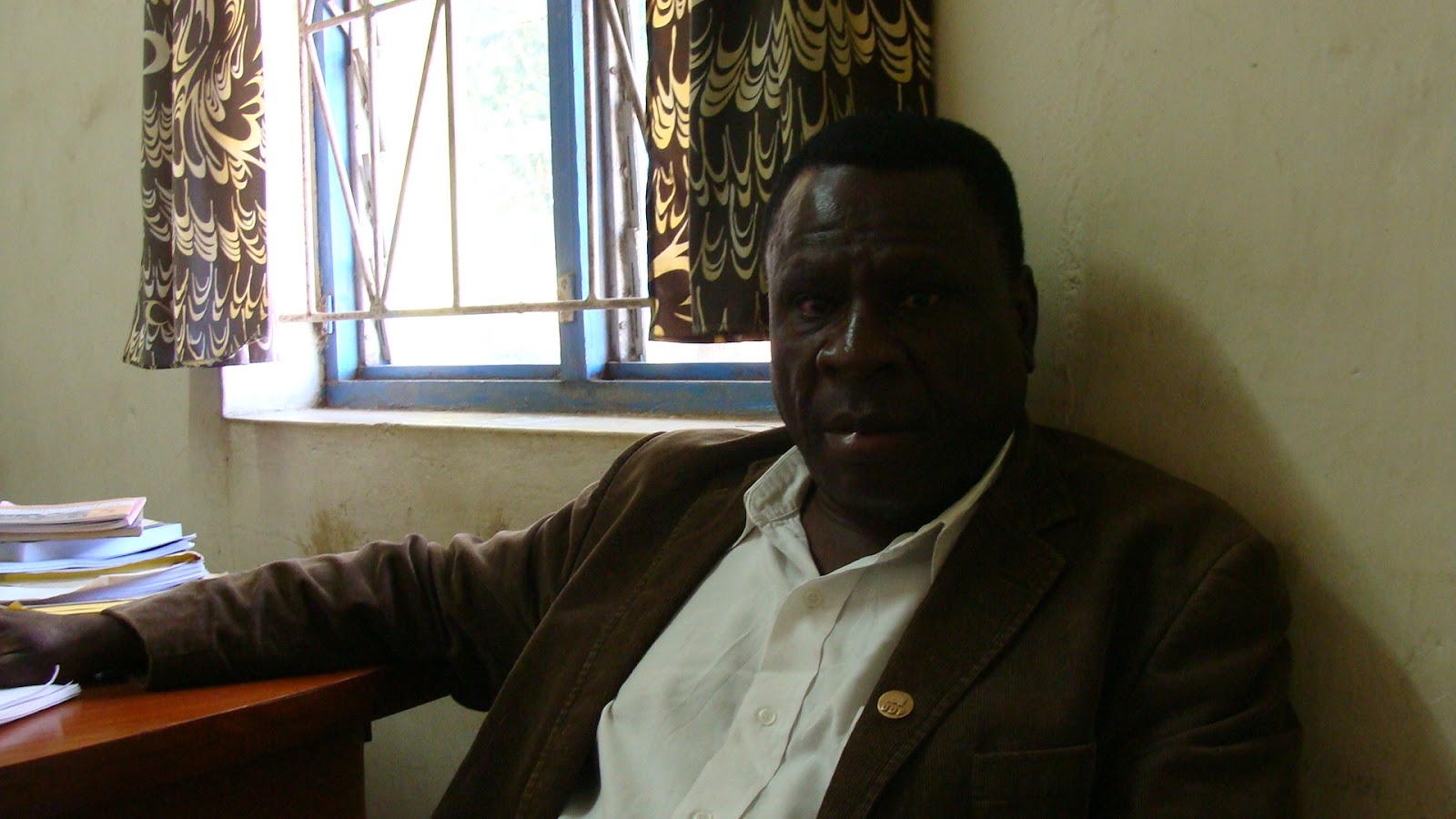
For a chiefly perspective, Weekend Nation spoke to GVH Ngolowera from Kwa Golden, T/A Chikumbu in Mulanje. We asked the chief what should happen for them to avoid political manipulation.
“Yes, Chiefs are like parents, they should be impartial and should oversee everyone regardless of their political party. If chiefs are to be impartial, I think they should not be allowed to comment on political affairs or participate in political campaigns and instead just listen to all views spoken by politicians and subjects,” said Ngolowera.
GVH Ngolowera

Hussein echoed Ngolowera’s sentiments and added that chiefs should realize that their institution is one of the most respected and thus they should represent all interests of all by helping democracy flourish.
As 2014 comes around, chiefs will be the target of politicians looking to use the chief’s traditional popularity for electoral gains, chiefs will be looking to the various politicians, especially the highest bidder for a pay-off in exchange for a hand in selling the politicians to the people, until the Chiefs Act or some law comes in this is how things will be.

Friday, June 29, 2012

So, who is a Malawian again?

The news excited the international community; it will no longer be a criminal offense to be gay in Malawi. The issue has not gone well with some Malawians and the past week has seen the cyberspace awash with debate with some saying that decriminalising homosexuality is not welcome because homosexuality is “unMalawian.” So what is Malawian?

Malawi is a god fearing country and God forbids homosexuality, this is the core argument of the anti-gay crowd, they go on to say that gay culture clashes with Malawian culture and again the question springs up, what is Malawian Culture?

“The concept of "Malawian" is a mental construct that exists in the minds of people. It is similar to the construct of political party affiliation,” said College of Medicine Psychologist Chiwoza Bandawe

Undule Mwakasungula of Human Rights Consultative Committee (HRCC) joined in on the debate: “If you are a Malawian that makes you Malawian, whether born in Malawian or not but as long as you there for the good of Malawi progress you are Malawian.”

Both Mwakasungula and Bandawe said there is nothing that can set Malawian Culture as a single entity

“It is a misnomer to suggest that there is one uniform "Malawian". Malawians are made up of people of different faiths or lack thereof: Christian, Muslim, Secular humanists etc. Malawians are made up of different economic standings as well as different backgrounds and ways of thinking. Malawi cannot have just one dominant culture,” said Bandawe

Mwakasungula said as a nation Malawians have not agreed what can constitute of Malawian culture, it’s just something they say but it is nothing clear cut.

So if the much touted Malawian culture cannot be pointed at, can what is “unMalawian” be singled out?

No, says Mwakasungula, he argued that Malawians have sung the song of being Malawians for too long so that they feel that they ought to protect cultural values which also happen to be undefined.

Bandawe echoed Mwakasungula’s argument and gave an example of laptops; cell phones and use of Facebook which he said are popular among Malawians and wondered if they are Malawian - Malawians, he concluded, come in all shapes and sizes.

The dominant feeling among the people that are advancing the anti-gay agenda argue that decriminalising homosexuality will bring the wrath of God on Malawi will corrupt morals of children’s morals and that it is just unnatural.

To be gay is like to be a black man, non of it is a crime


Recently several clergymen warned Joyce Banda against repealing the law against homosexuality and asked if she is trying to be above God, another pastor even called for a referendum on the matter. Mwakasungula however charged that many Malawians are using culture and religion to oppress minorities.

“We should not hide behind culture of religion to persecute minority groups.  Culture is dynamic and we have seen so many things we believed in years back being modified.  We can't be rigid because you don't like something or the way others are behaving,” said
Mwakasungula

Another academician and blogger, Jimmy Kainja also agrees with Mwakasungula and says he sees nothing wrong with adults being gay.

“Tolerance is very important. It's hard for me to believe that someone is out there to oppress minorities just for the sake of it. I believe a lot of people are deluded by their own beliefs and they try to impose this on others.

“This is where the question of national identity comes in - what is it? Why do you we accept some foreign values and refuse others? It's all subjective and ignorance, this leads to lack of tolerance,” said Kainja

There also seems to be a strong feeling among Malawians that homosexuality is being forced upon Malawians by Western powers, already some people are jokingly calling Malawi a “donor-fearing nation.” Western cultural influence is an unstoppable force with Hollywood influencing people even in China and Russia. Has Malawi been influenced by the West culturally?  

Can Malawi resist Western culture?

 Mwakasungula pointed out that Malawians use Western education, dress like Westerners, eat Western dishes and that most of the religions in Malawi are Western.

Malawians use western style of government, the family sizes are shrinking, MTV is visible in the streets even the accents of many a girl are trying too hard to echo the English and American,

Arguing on the same in a group on Facebook, Cynthia Mahata said: “The thing about Western culture is you have to get it all or reject it all, it comes as a package”

Adds Kainja: “Patrice Lumumba said ‘Africa will write its own history, from south to the north of Sahara.’ He was right, Africa will write its own history but it will be a negotiated one; influenced by global trends and culture.”

Are Malawians therefore being hypocritical in adopting capitalism and yet denying sexual minorities a place? Or is it unMalawian to raise such questions?
Description: https://mail.google.com/mail/u/0/images/cleardot.gif

Thursday, June 28, 2012

UDF Worst Casualty of Mutharika’s death?


A political scientist has warned united democratic front (UDF) to get serous with its strategy ahead of 2014 because it is the worst hit in terms of strategy in the aftermath of Bingu wa Mutharika’s death.

The scientist, Joseph Chunga, who is also the President of Political Scientists Association of Malawi, said this in an exclusive interview on Friday.

“In terms of strategy UDF is the worst of the lot. The Muluzi camp was championing the change agenda, now that they are part of the government they cannot talk about change now and when 2014 comes,” said Chunga.

Chunga said UDF should seriously show that it’s a distinct party even though it’s working with the People’s Party government.

UDF (Atupele Muluzi Camp) through its Secretary General  Kennedy Makwangwala, however insists the party is not finished like ‘an old curtain,’ even after mass defection of its members to the ruling People’s Party.

 “We are not disturbed by those defections. Most of those defectors are from the Jumbe camp, they had nowhere to go since their positions here at the main party have been filled with others after they failed to heed my call to return,” said Makwangwala.

UDF Secretary General: Kennedy Makwangwala


Asked if the power sharing deal that saw some UDF heavy weights like Ibrahim Matola and Atupele Muluzi working with Joyce Banda will affect the former ruling party ahead of 20914, Makwangwala was adamant saying UDF is not scratched.

He however said the coming of Joyce Banda has made them rethink their opposition saying UDF has suspended rallies and is observing Banda and giving her a chance, if she commits mistakes, the rallies will be resumed and the parliamentarians in government will be asked to out.

Asked if UDF strategy was dealt a blow with the sudden demise of Bingu wa Mutharika, Makwangwala admitted.

“Yes, we were getting strong based on the mistakes Mutharika was making, it’s why we are quite now because she is new and we want to give her a chance.”

The cool and composed secretary general insists UDF has healed from the infighting and said by 2014 UDF will have a presidential candidate with the convention slated for 14 October. 

Makwangwala charged that the defection to PP is but a passing craze and will stabilize in two months’ time saying already some people are returning to UDF, he gave an example of the central region committee that defected en masse to PP saying it will soon announce its return.

DPP, through its Secretary General, Wakuda Kamanga also admitted that the death of Mutharika dealt them a blow but said the party is still as strong as ever.

“It’s true that the death of Professor Bingu wa Mutharika affected us, its normal but being a party we will proceed and we are actually looking at 2014 as an opportunity to win as an honour to Mutharika,” said Kamanga.

Kamanga said DPP is not afraid of anyone ahead of 2014 and said as far as he knows; DPP is the only party that is in every village, town and region. He also said that there is no infighting in DPP as those that caused division (Hope Alliance) are now in government.

Chunga however observed that DPP will struggle come 2014 because it lost popularity among Malawians and said the only thing they relied on was the incumbency factor which was taken away by PP. 

He said that PP may not use the incumbency because most people in PP do not bring anything new to Malawians as they are the same old politicians. He also spoke lowly of MCP and categorised them along the likes of UDF.

“Malawians therefore have no real alternative come 2014 its why the opposition should not give up hope and go joining the ruling party, anyone who can be serious can stand a chance in 2014”


Wednesday, April 18, 2012

Certified Seed taking farmers beyond food security

John Msuku would easily have been just another farmer trying too hard
to eke out a living from growing rice in the Rice Scheme at Hara,
instead he stands out as a rare success story from the crowd. He now
takes care of his parents and siblings, he has build a modern iron
sheet house, he has roped piped water into his village, he has secured
land on which he plans to build a house to rent out.

So much has changed in his life for the better and he is just 29.
Life wasn't as rosy for John until him and about 11 others were picked
Higgins - This is what Irish Taxpayers want to see
in 2009 by the International Crops Research Institute for the
Semi-Arid Tropics (ICRISAT) to try out better yielding certified seed.
The selected farmers formed Chigomegzo Seed Multiplication Group in
2009.

The selected 12 were drilled with agricultural and management skills
and given seed whose harvest is sold back to ICRISAT at a higher
price. John Msuku at one point grew one and a half hectare of rice
which brought him seventy 100kg bags which were converted into a cool
K400, 000 upon selling to ICRISAT.

"People have profited from the certified seed, some have bought
fishing trawls, built houses, secured carts and life is good for them,
we eat healthy you cannot even notice that we are farmers," said
Witness Ngwira, President of Hara Water Users Association and member
of Chigomegzo Seed Multiplication Group.

Rice varieties that have been planted in the paddy fields all through
history produce an average of two 100kg bags of rice from 0.1 of a
hectare, the certified seed fills up five 100 kg bags from 0.1 of a
hectare.

Apart from being disease resistant Ngwira said the certified seed is
John Msuku (2nd from right) poses with an admiring Higgins and his parents
quick maturing available for harvesting after only 112 days unlike the
145 the common variety demands.

The farmers grow FAYA, Kilombero, Pusa 33 certified varieties which
they alternate between the two growing seasons.
Seed multipliers have also been given Pigeon Pees seed to multiply;
John Msuku has filled up about a hectare with Pigeon Pees and is
expecting about thirty 50Kg bags. This will also be sold to ICRISAT so
that other farmers can buy it for next season.

"Pigeon peas take about 6 months to mature, apart from selling them,
its good relish, we can use the stems as firewood and the leaves can
be burnt and used as a preservative," said Msuku

Principal Scientist (Agronomy/Seed Systems) Country Representative for
ICRISAT Malawi, Dr. Moses Siambi, said his organisation aims at
bettering people's lives using science and usually it is the farmers'
success stories that speak for the organisation.

"We usually work with groundnuts and pigeon peas but this time Irish
Aid asked us to try rice, so we asked farmers to form an association
so that they can produce, package and sell the seed it to others,"
said Siambi.

Elizabeth Higgins, the Irish Ambassador to Malawi said her country's
Siambi - Donations do not have to always be big
aid focuses on improving people's lives especially in the areas of
livelihood security and reducing mother and child mortality by
improving their nutrition.

"We have pumped in 2.2 million into ICRISAT and such kind of success
stories are what the Irish taxpayers want to hear," said Higgins, "I
have urged the seed producers to emphasize on quality, myself coming
from a farming background, I know that one cannot achieve quality
without putting effort into it."

Asked how sustainable the project is, Higgins said that is up to the
farmers' commitment and Ministry of Agriculture's supporting policy.
Siambi added that he hopes that the money that the money that the
farmers make from selling seed to other farmers will ensure that the
project sustains itself until everyone is growing certified seed.

"I always insist that donations do not have to be big to make an
impact, they just have to be tailored and you will hear success
stories like we heard here in Karonga," said Siambi.

Siambi also said that ICRISAT is working on an upland rice variety
which will not require flooded conditions to grow which according to
him is a positive step in meeting the increasing demand for rice.

Watch the farmers welcoming the Ambassador with an amazing display


Ngwira however notes that even though better seed is available, it is
difficult to convince the local farmers to adopt it; instead farmers
cling to the low yielding varieties their parents taught them to grow.
Even if they adopt the high yielding variety, rice farmers at Hara
Rice Scheme keep on being swindled by vendors who buy the rice at give
away prices. During the harvesting season there are even tales of
fishermen exchanging rice with fish or cassava.

Despite Hara rice farmers forming an association that buys member's
rice, it still doesn't have the capital to buy all the rice and after
buying finding market outlets is the problem.

"Government should help farmers sell their own rice to get the
Msuku's pigeon peas captured at exactly 30 days
benefits that middlemen get. Rice from Karonga is being exported but
do the farmers get the benefits? "said Siambi.

Hara Rice Scheme, which totals 238 hectares, was started in 1967 and
was being run by the government until the early 2000s when the farmers
took over running the scheme. The rice farmers are drawn from 11
villages surrounding the scheme and some have formed a cooperative
society.

In 2009 a factory was built aided by the European Union to help
farmers add value to their rice, it buys up to 21 tonnes which the
cooperative secretary Peter Msomphola agrees is too small, membership
to the cooperative is still at 65 as people fear the membership fee of
K5000.

"We have a small capital just above K1 million, we lack transport to
Hara Rice Scheme - Underused by tradition? 
reach far placed markets and lack of training," said Msomphola

Only a few focused farmers and lucky ones like John Msuku and Witness
Ngwira are able to earn real money from the waters and land of Karonga
South East, the rest continue to get ripped by vendors and grow low
yielding varieties making Hara a potential tool in fighting food
insecurity and yet underused.

Bright Baghaya Mhango - +265993205259
'I Am A Soul Rebel'

Thursday, April 12, 2012

The Robert Chasowa Inquiry: Start from Here

Chasowa's death is no joking matter - it psychologically affected me and many others, it took a life, it violated several rights and most painfully it went unchecked....here is what those who want to probe Chasowa's murder should do. I will be quoting from a document that widely circulated on the internet, dont worry about its authenticity, i was in the shadows when it was being compiled...

Here is the list of the people that should be asked questions: 

Davie Chingwalu and the police publicity team: Why did they go to town saying Chasowa had committed suicide? why was their inquiry rushed? and why did the police findings differ with Dr. Charles Dzamalala's. They should explain how Chasowa wrote a 'suicide note' and yet was murdered.

Police Commissioner Jose: He drove Chasowa to Lilongwe to meet the Police Chief, He was the one that paid for the hired car, the rented house in Chitawira....he should tell us more on who was funding the whole operation, its aims and how it ended - was it from the police budget? 

Peter Mukhito: He gave out moneys to Chasowa's gang when they visited him, he used to call and be called by Chasowa and crew - why was he dealing with young men without badges? Where did he get the 50 grands that he gave to Chasowa and company? Why did he not make it public that he had been working with Chasowa and company soon after his death? 

Mr Mathanga: Him is the guy that rented out a house to Robert Chasowa and friends. Who was paying him? what did the youngsters say when renting the house for? 

Black Moses: He is reported to have gone to influence Rafiq Hajat over the failed Demos, demanding some kind of package for 'protection.' He should be asked: who gave him and his click the expensive looking car he was in when he went to meet Hajat? who was funding the whole Anti-demos campaign that saw them go to Catholic University, Chancellor College and on the radio.

 Duncan Phiri, Phaniso Mhone and Justice Kangulu: They were operating with Chasowa, they minus Justice went to meet Mukhito in Lilongwe - they are the guys that i suspect talked to Chasowa in the last days or even hours - to that end, Chasowa's new number needs to be checked with the mobile company he belonged to, who called him on the fateful night? were there any SMS's

The Guards on duty: The company providing security on the fateful night was Kamu (partly owned by Mulli) - luckily sources from Poly tell me that the register for the night Chasowa died is available meaning to say we know who was on duty around the place Chasowa died - the thing is there was supposed to be a guard 5 meters from where Chasowa died - surely the guard must explain how without hearing a thud or cry a dead body showed up there.

Noel Masangwi and Peter Mutharika: Justice is said to have talked to Masangwi in his car, Chasowa is said to have kept on calling Peter, Masangwi, Jose and Mukhito reminding them of the K10,000000 - I think they also need to face the inquiry because if somehow Chasowa talked to them, they need to tell Malawi what they spoke with him about -  


Now Below is a publication that was compiled during an interview Duncan Phiri had with Poly lecturers led by Simbarashe Mungoshi....The author is a bird and its publication here is just for reference purposes.....if you want the document, well it was published on Medaifire: Whatever is written below this line is not me....
____________________________________________________________________________


“The Info in this publication was put together by an intensive interview with Duncan Phiri in the presence of several Polytechnic lecturers and interviews with several Poly students. Let it be known that if the remaining members of Chasowa’s click are hurt in any way, it is the people implicated in this document trying to silence them.”

THE BEGINNING

Robert Chasowa had links with a grouping called New Vision Youth Organisation (hereinafter referred to as ‘The Group’)
Grouping was formed between 2001 and 2002 by Duncan Phiri, Phaniso Mhone and Justice Kangulu (a childhood friend to Chasowa who recruited him [Chasowa] into the fold of the grouping)

The group was into various socio-economic activities, and it survived on rewards from reporting Tax evasion to MRA.
The organisation planned to stop demonstrations planned for August 17 2011 in favour of dialogue with the national president.

Towards this end, the grouping through Duncan (0992222277) at 6:30pm, Saturday 13 August 2011 phoned the Malawi Police Inspector General Peter Mukitho (0888203776) to link them up with the president so that the group could lay down its plan to him in person.

Mukitho liked the idea and on the same evening instructed Southern Region Police Commissioner, José to make contact with the group to get a more vivid picture of what the group was really about.
9:30PM same day, José (0888866369) called Duncan to arrange for a meeting on the following morning (Sunday 14 August).

José met Duncan at Green Corner (along Chikwawa Road) and drove to Mirale in Toyota Corolla as Duncan explained the group’s agenda. José talked to Mukitho who ordered that José drive the group to Lilongwe at once.
José and Duncan drove to the Polytechnic where they met Robert to inform him of the trip to Lilongwe. The rest of the group members were also told.

Around 1PM the next day Robert, Duncan, Phaniso (minus Justice who was on the day attending a family tombstone unveiling ceremony) were driven to Lilongwe by José, at Chingeni the group even stopped to talk to Justice who was driving back to Blantyre from the family ceremony, they briefed him of the trip.
2
Between 6 and 7pm the group arrived in Lilongwe and it was Robert who explained the groups aims to the IG, they were offered Chivas and Robert being of sober orientation had some soft but expensive refreshments.
The IG walked out for a good five to 10 minutes and talked to the president and returned with K50,000 bundles which he distributed to each member and even gave another K50,000 for Justice.

Mukitho told the group that they couldn’t meet the president and instead just asked what the group needed to carry out its plan.
Phaniso suggested K300, 000 but the IG countered with K500, 000 and made a promise that if the group was successful in thwarting the 17 August demos, TEN MILLION KWACHA awaited the group.

The group made demands of a car, an office space, two Ipads, two laptops, three desktops, a colour printer, two digicams, two still cameras, a laminating machine, three sensitive recorders and a perforating machine.
The IG provided all the above (in cash?) and offered the group another round of Chivas for the group to carry with them on their way back to Blantyre.

José drove the group to Kameza in Blantyre where they met Justice {at this point José left}. Justice happens to be Black Moses’ cousin. The group spent the night at Black Moses’ house.

On 15th August around 11 AM, Commissioner José called the group to come pick up their the promised essentials: Money amounting to K300,000 and a car (Suzuki Jimmy) rented for three months from Country Wide Car Hire registration Number MN 2452. The things were picked up by Justice.

The group paid K140, 000 upfront in rentals for a house in Nkolokosa belonging to a Mr Mathanga (K35 grand per month)

THE GROUP DID THE FOLLOWING AS PART OF THEIR BARGAIN

1. Robert bought over 10 influential students from Polytechnic with a promise of a K200, 000 from the TEN MILLION promised by Mukitho.

2. The Group won over Ken Msonda and Black Moses with a promise of K250, 000. Msonda was instantly given K6000.00 as transport money and he went over to radios spreading Anti-demonstration messages, Msonda also won over Undule Mwakasungula over the same. Hajat was approached by Black Moses and was reluctant but amicable to the group’s ideas of “No-Demos.”

3. Chancellor college students proved a problem to buy over as they were not learning and thus showed no mercy to the government and were in total support of the demos. However Duncan spoke of Robert and Black Moses successfully buying over one Symon if not Symon Mchawe who he said was given K15,000 and that he is the student that reported Associate Professor Blessings Chinsinga to the police after he gave a revolutionary example in class.

4. Robert, Duncan and Phaniso also courted Catholic University students and promised them K1500, 000 for their cooperation.


5. Robert urged the Polytechnic Student Union (PSU) to issue anti-demo statements but this was to no avail.

6. Robert went on air to speak against demonstrations and called for dialogue

NB: The university students, especially the Polytechnic were the ring leaders in the 20 July Demonstrations and the group targeted them to talk them out. Each of the groups’ moves was reported to some police as progress.

17 AUGUST DEMOS ARE CANCELLED

After the Demos were cancelled, the group took that as success but the relationship with the police soured especially with the IG failing to give the TEN MILLION KWACHA.

On 20 August José called Robert and Justice to their Nkolokosa offices and accused them of being too slow and that the police had to use some other grouping (CSO?). José also told Chasowa and Justice that the police had convinced Civil Society Organisations by itself hence the cancellation of the 10 million deal
.
On 23rd August the Suzuki was returned to the police on Jose’s instructions
The grouping was bombarded with demands for money from the bought over Poly students, the Catholic University students and Ken Msonda.

The group even bought a simcard (0994378323) for Msonda to talk to the IG himself on why the money was delaying. Msonda sensed trouble from what he discussed with Mukitho and told the group to drop the matter.
Group rented out the offices to a tenant identified by Justice at K105, 000

ROBERTS’ DOWNFALL?

Robert was bitter and joined YDF where he and his mates: Black Moses and a Chikapa sourced sensitive information from Kamlepo Kaluwa, Rafiq Hajat, Ken Lipenga and other disgruntled DPP high ranking officials to publish in their “Weekly Political Update.”

Robert kept calling José, Mukitho and Peter Mutharika (0999005276) to remind them of the money that was supposed to be given; he [Robert] even created a special email that he used to talk to Peter Mutharika.
One day Robert and Justice called Peter and he gave the phone to Mulli and Masangwi who told them off.
Justice also talked to Masangwi in his car.
Robert was frustrated, he called José and said that he would go public on 27 September if the money was not given by then.
Two days earlier, he had already talked to Nyasa Times but didn’t shed more light on the gravity of his war with DPP.

4
DEATH

8PM/ 23rd September, Robert speaks to his lawyer (Trouble Kalua) about his being wanted by police.
12AM, 24 September, Robert arrives in his room in the company of Ndagha Mkandawire (his classmate), they pick up poems to go study them at Ndaghas place (about 300 metres away)

1PM Robert is spotted in the student’s common room where Ndagha came to buy a cigarette

1PM a VW Carvella parks just outside Poly campus near the Police Headquarters inside are five people one stays in and the four go to Poly student’s common room.

2AM, Allan, Robert’s roomie finds several missed calls of a new number, he calls back and Robert answers and says that that is his new number and that he was at Ndagha’s place.

3.33AM Exactly, Robert leaves Ndagha’s room for his place

Around 4AM, four strangers leave Poly campus, they seem in a hurry.

Around 4AM KAMU Security Guards who were guarding the campus on that day, (KAMU = a company Belonging to Mulli Brothers) thought they saw some people pulling on someone and thought it was just drunken students

Around 5AM, Robert is found Dead about 400 metres away from Poly students common room and Ndagha’s Hostel, where he was
.
NOTES ON CHASOWAS BODY

Chasowa lost very little blood (not more than a litre) showing that he was not killed by a fall, loss of blood and most importantly that the blood came out via rigor mortis (if the heart was still pumping, there would be a lake of blood) this shows that he was dead before he bled.

Chasowas had dust on his knees, showing that he had knelt….what this the time he was being forced to write the suicide notes?

Chasowa still had his inner shirt tucked in…this shows that he didn’t resist or struggle to his death.

Chasowa was found lying face down, but the face had no dents to show that he had fallen, his shoulders and all parts of his body had no fracture to show that he had fallen.

Chasowa was found about 10 metres from a place where over 6 years ago a guard had fallen to his death and there was brains and blood spread all over….that was not the case with Chasowa
.
Chasowa had a clean slit just above his neck; it looked like it had been delivered by a sharp edge like a panga.

The place where Chasowa was found is surrounded by about five security guards within the ranges of 5, 20, 10 10 and 25 metres and none of those guards had heard a thud or cry.

Chasowa’s room keys were still in his pocket but the phone he had used to call his roommate at 2am was in his room.
5
Chasowa was an Adventist and also a Pentecostal sympathiser, suicide was out of the question.

OTHER ISSUES TO LOOK INTO TO

Why did police investigators only spend 5 minutes on the crime scene and ask nobody else but his roommate and Ndagha and yet come up with a report?
Why did police work over the weekend to release a report when they cannot even give bail over the weekend?
Why did they confiscate Ndagha’s computer [which Robert used a lot] when they had already found a suicide note?
Who put back Robert’s phone in his locker? When? Is he/she not the one who planted the suicide notes?
Why were the suicide notes misaddressed? Would a son address a letter to a dead brother when he meant to address the father?
Why was the case handled by the national police spokesperson when it fell under the regional police?
Why hasn’t Mukitho or José admitted that they knew Robert?
Why was there no DPP presence at Roberts’s funeral?

MY THEORY
Robert gave away his position by visiting the student’s common room, the spies on campus then alerted the assailants, the assailants were also in that very bar!

There is about 20 metres of unguarded and dark open space between Ndagha’s hostel [where Robert was] and the next hostel. As Robert stepped into this darkness he was tasered by a stun gun (electric immobilizer) which have just been purchased in their thousands by the Malawi Police or he was hit by a blunt object on back base of his skull. He was then dragged (hence the dust in the knees) to the point where he was found (hence the absence of blood trails).
The killers then knew that the place was surrounded by guards so they dumped him and gored his head to make sure that he was very dead…and then they left.

Robert died with a look of surprise, open eyes and open mouth and the areas surrounding the eyes were red with blood (internal bleeding). That shows that the blow from behind was so powerful that it nearly ruptured his eyes, the surprise in his eyes might be the fact that the killers were people he knew well and hence didn’t expect the blow….the police? Remember the group reported their progress to some police officers? They could have rang him to come discuss the issue and then attacked him. Also note that earlier, police had been coming to talk to the Poly academic registrar (Chirambo) about Chasowa’s role in YDF. Why not just call him and arrest him?