Showing posts with label China. Show all posts

Friday, April 10, 2020

Chinese Exploiting Malawian Kids in Racist/Humiliating Videos Sold for Thousands in China


Malawian kids being exploited by Chinese
Those kids you see in the wildly popular video being made to shout ‘I am a Nigger with Low IQ!’  by some Chinese guy might be from Malawi and it is time we stopped that type of behaviour.

That video is just one you heard of, there are others of Chinese putting black boys sitting their laps and making them curse in Mandarin. There are is another of a Chinese man making fun of the lip-pulling tribal woman of Ethiopia by trying to kiss them.


An advert selling 'kids' services' on Weibo
A simple search on the Chinese copy-cat of Twitter, Weibo, gives thousands of hits of such videos, they have been in circulation in China for years. I tracked down one such page (非洲小花妞祝福视频拍摄) roughly translated as ‘African little girls singing blessings.’

Chinese looking to spice up their birthdays or looking to impress their girlfriends with black skin - a rare, feared, hated and often misunderstood thing – cough between MWK5000 and MWK50,000 for a customized one.

Deals are made on Wechat
Once the money is in, the Chinese on the ground in Africa invites a group of unsuspecting black people, usually young men, children, and mothers from rural and semi-rural areas for the shoot. They are dressed up, sometimes in Chinese attire and made to parrot some phrases in Mandarin while goofily dancing or posing.

The video is then dispatched to the happy customer who posts it on social media for friends to awe and ask how black monkeys from the Savannah got to sing happy birthday to them by name.

Remember, all these videos are being posted and transacted on WeChat, QQ and Weibo, where police come to your door if you post political opinions authorities don’t like. The fact that these videos are freely floating on there - you can draw your own conclusions.

Ad on Weibo: African bodies = Money in China
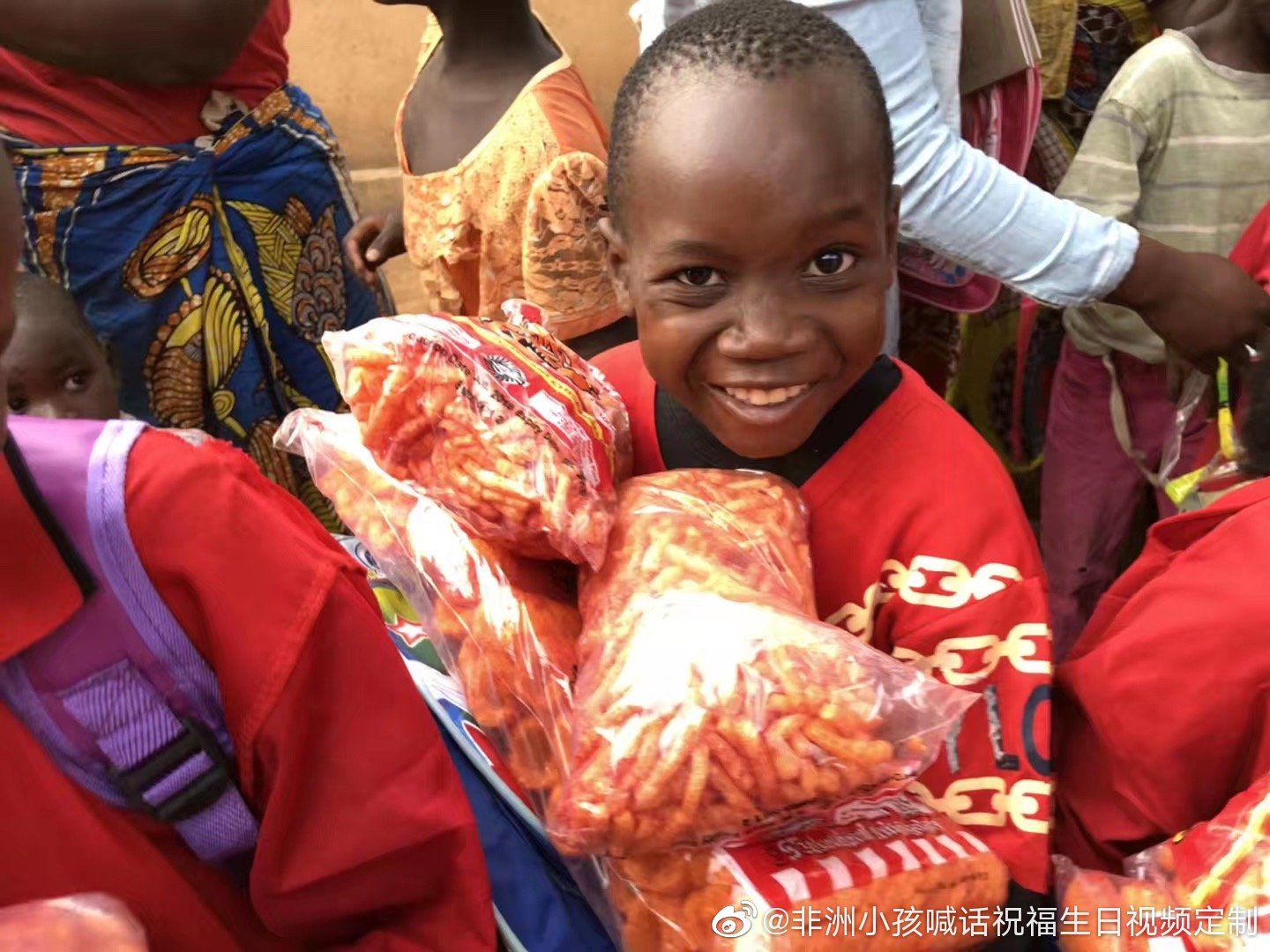
To convince the communities, these Chinese men buy snacks and ‘donate’ and pretend to be doing philanthropy.

This is happening in Zimbabwe, Zambia and Malawi. The products that were ‘donated’ there and ones that appear in their online picture catalogues are in line with the products you can find in the said countries. 

According to this highlighted videographer, these kids and mothers are Malawian and the young men are Zimbabwean and you young women are from Zambia. There is even a service from Egypt and Ukraine.

In a blog post defending this Blaxploitation, the vendors claim their ventures have ‘greatly improved the conditions’ of the places they shoot from and that they donate food and money that is ‘more than what the parents earn.’ See here (link in Chinese).


The page also denies they make the kids parrot insults and rejected the video of the kids parroting self-insulting chants.

But look here, folks, just like on the tobacco estates, if the kids are earning it is child labour, if the kids are being used to make earnings for someone else, it is child exploitation. So why the fuck are these fuckers not in some jail?

Jokes: The so-called Donations
These people are being left with kids alone sometimes indoors, do we know if child porn is also being demanded by some pervs in Asia?

Does it look like a donation to you if the donor demands you wear some fake silk dress and chant like you are in a Kungfu movie before you can collect your ‘donation’?

In China there are 1.4 billion people there, these guys make thousands of videos and that translates to millions on money, no wonder they are now expanding to the Middle East and Eastern Europe to get brown and white monkeys to dance for Chinese audiences too.

Dressed like crowns and exploited- Zim Youths
This particular page, by his own admission, has produced over 100,000 videos, you can imagine the amount of money being made. 

If you conclude that this is acceptable, then cool…if not then the Chinese that are filming these videos around the Njewa Area in Lilongwe and other areas in Malawi need to be warned off it or maybe brought in for ‘a talk.’

In any case, if there is going to be a donation, let it be a donation, because the videos make a lot of money and they should not be hidden behind 'charity.' In the caption accompanying the picture below, the vendor said buy his video so his mother can afford some rice.

I'm happy, informed and totally understand consent!
The opening up of the country to China should not include uncultured, racist and exploitative elements like these.

Some that feature in ads are not even 2

This guy and his click in Malawi need to get got

Just look at the video below of a Chinese boomer putting a kid on his lap and making him say the worst curse words you can find in the Chinese dictionary.


I hope the media, the Chinese and Malawian authority and anyone who can read will make sure not another video like that is made again from Malawi or Zambia or Zimbabwe. The people don't know what they are talking about and the fact that some videos are being made that are humiliating and criminal means the whole enterprise is suspect. 

Tuesday, March 3, 2020

Is China Using Blacks to Distract Population from Coronavirus, Economic Woes?


Hundreds of millions of Chinese are still in virtual coronavirus quarantine and yet to report for work in the Chinese New Year, millions of firms are facing bankruptcy and the country’s factory activity shrank at a record rate in February. With such gloomy circumstances and so much not to like it seems there is something most Chinese can all at least agree on: they really hate black people.


One such post on Weibo
Last week, China, which is one of the hardest places on earth to emigrate to (only had less than 1500 naturalized citizens in 2010) suddenly announced that it was seeking opinions on a draft to make it easier for foreigners to gain permanent residence in China. Bad move.


The backlash to the announcement was instant and sustained, it equals or surpasses the unprecedented backlash that followed the death of the whistle-blower doctor from Wuhan.  The only difference was unlike the backlash on the death of Li Wenliang being censored, the current one is being left alone if not fanned.


Multiple hashtags of the issue started trending on Weibo a Chinese copy of Twitter, every post by authorities or state media was quickly bombarded with hundreds of thousands of comments on the proposed bill. One of the hashtags was read almost 4 billion times in a country of 1.4 billion.


Very few of the comments of posts provided any intellectual justification for their opposing the bill, some did: saying the move would foster corruption and take away jobs, but most only stated, zoomed in and focused on one thing: black people.

People posted about how China would be taken over by strong black genes, how Chinese women would be raped, how blacks would bring crime. Some simply stated that they really hated black people.


Citizens posted pictures of officials in crosshairs and some depicted an official bent over and a black man in an orange prison uniform and the N-word plastered on his chest seemingly sodomizing him. Apparently the official, Yang Yiyong had said some positives words about inter-racial marriage.


Every Chinese person who could find a video of black people doing crime did so and plastered it on social media. One of the most widely circulated shows two black teens shoplifting in an unidentified country.  Another video from the 120db movement in Europe which has young white women describing being harassed by refugees also got widely circulated.


Somewhere in Africa
For effect, pictures of black men with Chinese girls were plastered all over the place and the women were called whores. The vitriol was reminiscent of the recent controversy over a program by Shandong University to foster cultural communication during which netizens also used pictures of Chinese women with brown and black men to make their points, to bully the girls and to stroke nationalism. 


Even though gory videos are not allowed on Chinese social media, it seemed Weibo, QQ and Wechat made an exception if the offender was black.

Fake news was also a big part of the narrative and it was pushed by accounts some of whom are verified. One involved a picture of black people had words saying that France is now 80 percent black.


One picture featured a banner in Africa shouting: ‘Rape Rape Rape: You can do it in China. Refugees can do anything. Contact the Chinese Embassy Now! You will not be punished.’ This text was wrapped around a drawing of three black men pinning down and raping an Asian woman.


Black people now majority in France they claimed
Ohers circulated a picture of pure yellow corn next to another  batch with dark purple corn overshadowing the yellow.

Some shared accounts of how they fear walking around on campuses where black people also study, some shared pictures of blacks on Chinese trains. Meme after meme rained.


I have lived in China since 2013, I know it is one of the most racist countries on earth, but this week’s eruption on social is one I have not seen before.  Even some of my former Chinese students were blatantly posting about blacks bringing HIV to China and their hatred of black people. 


It is fashionable for Chinese schools to openly advertise jobs and demand that only white people apply. In some Chinese cities, schools would rather have Russians who can barely speak English than have black English professors. This is something every black person who spends enough time in China knows. The current racist movement is however a new thing. 
Threats were issued


With the economy in bad shape, with households in financial trouble could someone be provoking fears among the population to make them forget their actual problems? It sure seems so because with all their censorship and their toughness against the topics that criticise government, authorities seem to be happy letting this one gain steam.


None of the naturalized citizens of China that I have seen are black, it is already hard for Africans to even apply for visas to China and some hotels in China blatantly refuse to let in anyone with an African passport.


It is fashionable being racist in China. When one rapper was accused of promoting drug use, he apologised and blamed it on ‘black music,’ and he was forgiven. One wonders how people like me who listen to nothing but black music are seen in China.  There is also a massive movement of Chinese going to Africa and making demeaning videos of unsuspecting natives in Mandarin for clicks and views in China.

Chinese greatest fear: use your imagination

Chinese can be racist all they want, but to use blackness as a scapegoat in times of economic and social turmoil is disturbing.  It is more disturbing if one considers that there are a million Chinese in Africa and the author Howard French found that Chinese push African governments to lower immigration restrictions against Chinese as part of trade deals.


Black people are subjected to a medical before and after they enter China, most of the HIV clusters in China have no links Africa. They come from the women Chinese men are fast-tracking and traffic into marriage from Myanmar to fill the shortage of women in China, from gay men who are not targeted by HIV outreach messages and from bad practices in collecting blood from poor and desperate locals who used to sell blood for survival. Yet the black man is the bogeyman.


Doxxed
When the coronavirus broke out China constantly complained of being stigmatized, it even expelled reports of the Wall Street Journal over a headline it deemed racist. All that now seems very questionable if anyone looks at what is on Chinese social media now.


The most retweeted tweet in the world was one that promised people they would win money, even then it only got retweeted about 5 million times. Compare that to the billions of views and hundreds of millions of comments on the issue, it should show you how hateful just one country is towards blacks. 
Interracial couples are being doxxed
and shamed


Some would argue that it is simply Chinese being against foreign influence, but that would be not correct because even though there are more whites in China and more white-Chinese couples in China, they are conspicuously missing from the uproar and slander.


There are many African students studying in China as China desperately tries to appear internationalized, many Africans also jet into southern China to buy products that keep many businesses in China alive.


 How is it possible to hate the very people one needs? How long before all the social media vitriol turns into real violence against black people in China? What is the end game?

Friday, March 8, 2019

On that hot China question – Running Mate Debate Analysis


Frank Mwenefumbo’s response to a question on what the UDF would do about the illegal logging and mining by Chinese nationals during the running mate’s debate should send shivers in Beijing and at Area 12.

Mwenefumbo started his response by saying it is not just the Chinese  doing the plunder and wondered why there are no strict laws for immigrants in Malawi like there are abroad and then he dropped the bombshell:

“The UDF will make tougher immigration laws, and as for the aforementioned Chinese…The Chinese, I personally do not see their value here because when they bring their money, their loans, they bring their own workers  and Malawi does not gain a thing and yet we will give back this loan, this , the UDF government will look into and to be honest we should wary with the coming of the Chinese, the do not add value to our economy.”


Applause ensued.

The moderator got spooked and asked if that policy would not scare investors. Mwenefumbo stood his ground.

Didn't Hold Back - Mwenefumbo

UTM’s response was tame and beat about the bush but it also hinted to taming migrants and bemoaned the lack of laws.  The MCP took a dig at the Chinese who come to open bars in
rural areas and indicated that the country should only invite ‘real’ investors.

PP’s Jana gave an interesting response saying the tough laws are already here and pointed at the judiciary as part of the problem of the laws being ignored.

Now, maybe, Jana meant to point that finger at the Police who need to enforce the law, but the bigger story there was the unified anti-China statement that echoed from the debators and the audience.

Now here is my take.

First, let us do the fact-checking. The Chinese - be it through MUST, grants, loans, scholarships, projects like roads BICC, cheap materials and as a market for raw material - do add value to the economy.

As for everything else…

We indeed need to stop the poaching and we indeed cannot just open our streets to anyone who wishes to come. That is on one hand, on the other it is not the Chinese who locate the mines or forests to plunder, they don’t shoot the elephants, they don’t fly into Malawi under cover of night.

As Malawian working in China, I cannot just get a job or start a business here without proper and sometimes excessive and prohibitive paperwork. I am not allowed to stay in 90% of the hotels here, If I rent an apartment or even just move to a new city, I need to register with the police within 48 hours.  

So, as you can see, and as Jana mistakenly pointed out, the problems are with our enforcers. If we shut out the Chinese, the Nigerians will come, if we shut out everyone else, we will do it ourselves. We do it well enough in Dzalanyama (which feeds Lilongwe with unchecked illegal charcoal.)

If we want to protect our resources, why not do it? Do Chinese force their way into the national parks? If China was lawless, I could be a drug dealer, or also go and traffic some pandas or start a prostitution ring, that is not possible because the Chinese are vigilant, have the will to check and prevent and the operational tough laws to deter.

Also, why do the Chinese not cut down forests in the UK and why do we never hear reports of illegal Chinese mining in Canada or poaching in the Yellowstone National Park in the USA? 

The problem is with our system and these bad Chinese guys are just cashing in on an open gap. Here is where I also need to say that the Chinese criminals need to be separated from the Chinese as a nation.  If a Malawian is caught dealing drugs in Hong Kong, we do not expect it to be seen as representing government or the people in Malawi as a whole. See?

On Loans and Investments

As for the unfair loans and the projects that see cheap labour imported from China, it is the same thing as the poaching and illegal mining. A loan is an agreement, it was signed and all details fine-tuned and agreed to before it was given. If we want to prevent an influx of Chinese labourers or ridiculous project arrangements, let us do so before signing the agreements.

Implications

It will be very interesting to see how the Chinese respond to this. They will make a mistake by siding with DPP because it will mean admission of guilt. The best way is for them to deny the involvement with criminals and declare that the laws deal with criminals.

China can also simply avoid these issues by employing local labour, how this is such a hard thing to do baffles me.

The Chinese can also do themselves a favour by engaging in more areas than just trying to promote their culture and business. This to me is a huge weakness on their part.

Marxist Links

Also interesting is the fact that despite all the exploitation by Western nations, only China is being picked out. No one is brave enough to point out how a few European families still own almost half of Mulanje and Thyolo or that they also give us projects where we can only buy products from their country or how they game the commodities market to keep us poor.

I mean even the debate was sponsored by the big guns, UK, US, Ireland and they were there in the front seats like kings. Imagine if China attempted to sponsor the event!

So, yes, Chinese projects are unfair in many ways and Chinese nationals are leading the plunder of our resources, but to say we are powerless or victims is a lie, they never forced us not did they come here by way of an invasion.

Lastly, while we examine the Chinese, we should not forget the Americans, and Brits and these white folks who have been fucking us since records begun. 
Ciao.


Tuesday, February 26, 2019

How to Get that Chinese Scholarship - Tips and Sample Motivational Letter

Many people think that the Chinese Government Scholarships are awarded mostly to children of the DPP party or sons of high ranking government officials, maybe those people say that because the surnames of the winners of the scholarship sometimes read like a DPP or top government officials' list.

I had the same doubts back in 2013, after all I was a reporter at The Nation, which was not only critical of the government but also of Chinese nationals in Malawi. I still got the Scholarship without bribing anyone or without asking anyone to put in a good word for me. 


I want to share with you how I did it and maybe you can grab a tip or two. You never know,  you might be the lucky one this time.
1. Have Good Grades

Just because it is open to all does not mean you can get your shitty lower class pass degree and think you will get in. 
2. Nail the motivational statement

This should actually be number 1. This is important. All people who are applying are qualified, so who can go in out of the 1000s that apply. To be one of the 35 or so that make it, you need to get creative with this part.

 > Don't waste time talking about your dead mother or how you were a Scom chair in secondary school. Look to the future. What will Malawi get if you get that degree? What will China get? What will you and your community get? 

These degrees are offered as part of a soft power push by China, so in your statement remind the Chinese that you will help bridge the gap that is there between Africa and China by way of skills, changing attitudes and even language.

> Remember to be unique, I always write these things playfully because I know the one who will read is a man like me, they don't want to be bored with details about how you never stole any money when you were a treasurer. They prefer to see what you can do, or even when you stole the money. 

Here is  what my motivational statement looked like:

"I write to apply for a scholarship from your government to study a Masters Degree in International Relations at Shandong University starting this September as you advertised in The Nation of January 31, 2013.
I hold a Bachelors Degree (with credit) in Journalism from the University of Malawi; I have Malawi Senior Certificate of Examination (MSCE) with a distinction average. I have three years working experience.


 I am a 27 year old single Malawian resident in Lilongwe, with a healthy constitution; I have never been hospitalized and possess an athletic build. I currently work as a reporter for Nation Publication Limited.


I did International Relations as a module in my fourth year. The brief stint with appealed to me more than journalism...there is surely more satisfaction in linking cultures and fostering inter-border relations than just writing about such.


I am youthful and energetic and take my studies seriously, I respect authority am highly ethical. I work hard to achieve my goals. I require minimal supervision and I am well versed in research methodology


I have always wanted to get closer to China, as a fanatic of Chinese movies, I have always admired the Chinese culture: the dress, the cuisine community organization, values such as quest for justice and discipline.


 It is my burning desire to get even closer to Chinese culture and this opportunity is but a perfect chance.


As a journalist, I see how the African media views China, scandalizing even cases that are better talked over at dinner.


This is however due to a gap that exists in our society, China needs Africans to represent it in Africa so that they should, using the multiplier effect, change the crooked image that rests in the mind of many an African.


If I leave china with a Masters degree in international relations, I am almost certainly going to be in the service of China-Malawi relations and what better candidate can best serve for the position than he who owes his Masters degree to the Chinese?


The British managed to set up an empire in Africa by engaging locals; they got hold of African power by using Africans themselves. In 2013 and looking ahead China is set to surpass the United States of America or Britain in many spheres of comparison. But what is being a giant if you have no friends?


The international Relations books available in Malawi are not surprising very biased to the Western powers, all examples and theory are Western....doing an International Relations course in China will not only balance the bias but also unearth the hidden knowledge that I never got to see from the Eastern frontier.
I want to be part of the Africans that helped China plant its foot in Africa. A Continent which can provide most of the much needed natural resources that China needs to truly be a superpower."

As you can see, I spoke what they want to hear, I was honest in the process. They want our resources, we want skills and investments. 

3. Don't be over-ambitious

There are thousands of colleges in China. The Top five are universities that compete with the likes of Havard and even the Chinese sweat to get in.  Look at the list of universities in China and straight away avoid the top 5 or so.


Tsingua, Zhezhiang and names likes that ned leaving alone, unless you are Mathews Mtumbuka or something, why not make your first choice be a university that is in the middle of the rankings, I went to a university that was ranked 27 there and 400 in the world, that is still a very good university. I got in cleanly.

4. Make that Sacrifice

If you go for a Master's degree in English, you will just need two years, if you go for a Masters in Chinese you will get three years. Many will choose English but they forget they are actually limiting their choices.

I would say be open to do it in Chinese, and by the way, despite how it looks, Chinese is easier to learn than Chiyao. In just six months, you will be ready to go in class with the Chinese. Believe me.  Also, after 2 years in China, you will wish you stayed some more. It is fun. 

Choosing Chinese language also shows you are willing to learn their culture and that should win you points. 


5. Don't Lie

being a corrupt country, you can simply go and get your medical form filled by some dobadoba at the hospital. That will back-fire. A Malawian lady came to China, they found her with HIV and she was also pregnant, they did not even allow her to go get her bags, they sent her back in shame in full view of all.  Go get tested and make sure that before now and September, don't catch HIV.
 If it is eating, go to China, you will eat all you want there in a country with almost no HIV. 


That also relates to your CV and recommendations. Some of the people you have listed in your documents will be called and some details checked. Don't take a shortcut.

6. Be presentable


Don't use that ID you took in your beach wear, Chinese judge a lot based on stereotypes and face value, it helps to look like a good black person. Play along. You can get that mohawk after you get there. 

7. Do research...

Now this is a bonus, first, do you know where the university you picked is? North China is as cold as Russia, south China is as hot as Chikwawa. Racism is rife in the south, food is spicy in the West, Air pollution is seriously an issue to consider in the big and industrial cities... small things like these are important.

8. Important Links

Here is the scholarship announcement

To Search for courses, find info on courses, whether they are in English or not and info on unis, this is a great place to start: CUCAS

The Medical Examination Form is obtainable here
http://mw.china-embassy.org/eng/ZGJXJ/P020190211774152280164.pdf


PS: If you have any document that can add advantage, for example TOEFL or IELTS, I would say add it to the mix, same goes for non-degree certificates. Do everything you can to give your application that unique smell.

If you have any questions, tweet to me on Twitter or Insta at: @mutafire

Good Luck.

I don't Edit blog entries. All typos unintended. 


Tuesday, August 25, 2015

Protect the Buddha from those Selfie-takers!

It is always hypnotizing to be in a Buddhist temple. I will never get used to it. Each time I am in a temple I shut up and gaze at the statues and take in all details about the temple, but one thing I also cannot resist is try to capture that golden beauty on film.

And that is an issue not just for me, but for many tourists and temple minders.

Atop the Hanging Monastery in Datong, Shanxi
I have been to many holy sites in China, The Jaded Buddha Temple in Shanghai, The Grottoes in Datong, Temples atop Mount Tai in Shandong to list but a few.

You are not following. To take pictures inside temples or not to, that is the question.

In some temples, like the Jaded Buddha Temple, they allow you to take photos of replica statues not the real one, in Datong, they apparently prohibit only those statues inside the caves and the rationale I hear is that camera flashes might damage them.


As someone who is not Buddhist and someone who grew up in a Christian home, I still have issues with snapping away at the Buddha even when given the go-ahead.

I have never seen a Christian snap a photo from inside a mosque or a Buddhist walk past a church and fire his lens at the statue behind the pulpit.

The dilemma continues. Why are we walking around in temples with cameras? Who allows us to come into the temples? I have never seen a group of tourists walk in on a church sermon.

Well, who allows us, tourists, to get into these temples? They actually have gate fees for most of the prominent temples I have seen in China, huge moneys get collected to allow you to go and see the statues of Buddha and the artwork therein.

At the Jaded Buddha Temple in Shanghai they bar you from taking photos of the precious imported statues of the Buddha but you can buy water stacked next to the statue or you can ‘taste Buddha’s Tea’ in the next door.

This begs another question, are these commercialized temples any holy?  And is a statue of Buddha which is far from his grave or birthplace any holy?

Muta at WutaiShan, Shanxi, China
Should we back off from these sites and let the monks and believers practice their religion in peace? 

Maybe Buddhism is just a very tolerant religion. Or maybe they need money from tourists to maintain these sites. 

In the end, I end up clicking away and even posing in front of the statues, it is too precious not to have a backup on the camera.

It is also because the followers of this religion are not maniacs, no one will get blown up or reprimanded, after all Buddha would definitely allow selfies with admirers especially if it was after meditation hours.

Click away. 

Realism as both Hurdle and Panacea in addressing Climate Change

Climate and Climate Change: The issues

Climate is generally defined as a measure of the average pattern of variation in temperature, humidity, atmospheric pressure, wind, precipitation, atmospheric particle count and other meteorological variables in a given region over long periods of time. It is different from weather, which is the measure of these factors over a short period of time.[1]
Climate Change is thus simply put, the change in the average weather but the UNFCCC defines it as “a change of climate which is attributed directly or indirectly to human activity that alters the composition of the global atmosphere and which is in addition to natural climate variability observed over comparable time periods.[2]

Closely linked to climate change is global warming which is the alleged rise in global temperatures due to the increase of gases in the atmosphere which create a blanket that lets in solar energy and prevent it from leaving just like a greenhouse.

Rising levels of carbon dioxide and other heat-trapping gases in the atmosphere have warmed the Earth and are causing wide-ranging impacts, including rising sea levels; melting snow and ice; more extreme heat events, fires and drought; and more extreme storms, rainfall and floods[3].

Washington State Department of Ecology says scientists project that these trends will continue and in some cases accelerate, “posing significant risks to human health, our forests, agriculture, freshwater supplies, coastlines, and other natural resources that are vital to … economy, environment, and our quality of life.”

Over the past 10 decade, the world has emitted more CO2 than it did from the entire period since the start of the Industrial Revolution up to about 1970. In 2011 alone, the world emitted more than it did in the 30 years between 1850 and 1880[4].
co2_data_mlo.png
Fig 1: CO2 Trends near Hawaii, source: National Oceanic & Atmospheric Administration

It is figures like these that have catapulted climate change into the international agenda and subsequently International Relations.

The reversal of climate change takes the form of reducing emissions of greenhouse gases and to reduce greenhouses means curbing industrial pollution (output) and using cleaner technology among other measures all of which are undesirable by the industrialized states since they mean reduced output/ money.

The issue is also compounded by the fact that most of the emission is by the global north, which are rich and industrialized countries while the effects of climate change are being felt or will be felt more by the global south.

This is what Joshua Goldstein would term a collective goods problem. The collective goods problem, also known as “collective actions,” “free riding,” “burden sharing,” “prisoners’ dilemma,” “mixed interest game” or “tragedy of the commons” is the problem of how to provide something that benefits all members of a group regardless of what each member contributes to it.  The collective goods problem occurs in all groups and societies, but is particularly acute, as a world government to enforce on individual nations, the necessary measures to provide for the common good (Goldstein 2012).

Several efforts have been employed by states to curb climate change – efforts such as the Kyoto Protocol, but as the Slate reported, emissions are actually increasing and if climate change is real, it is coming to get the earth.

This paper would like to argue that in the current international regime, in which realism dominates, solving climate change is not easy if not impossible unless realism itself is expanded to include climate change as a security issue.

False Hope: Ozone Layer Gains

The Ozone Layer is a layer of ozone gas in the atmosphere which traps harmful ultraviolet rays that can cause cancers among other harmful effects. When the world woke up to the realization that the Ozone Layer was being depleted by chiefly chlorofluorocarbons (CFCs) which were used in the refrigeration technology and aerosol sprays, it sprung into action.

The 1987 Montreal Protocol 22 states agreed to stop producing CFCs by 2000 but with more evidence of ozone layer depletion states went into urgent action and by 1995 major industrial nations phased out CFCs and as at now the Ozone Layer is said to be healing and will completely heal in the next five decades. (Goldstein 2012).

Former UN Secretary General Khofi Annan called the efforts to address the Ozone layer depletion as ‘perhaps the single most successful international agreement to date,’ and liberalist are likely going to use the this as an example of what institutions can do in international relations and climate change activists will cite it as the way to go in the fight against global warming, but they are mistaken.

As Goldstein put it, the   costs of replacing CFCs were much lower than those that need to be incurred to tackle global warming. For CFCs cheap alternatives were available this was in addition to the fact that the risks of ozone layer depletion were more immediate and concretely understood.

What would be of the Montreal Protocol if USA did not ratify it?   And if the USA did not ratify it, would smaller nations like Australia find it any meaningful to sign it?
The above question needs an understanding of realism as an international relations theory to be addressed.

Realism as a hurdle

Realism is an international relations theory that can be traced back to Niccolo Machiavelli and Thomas Hobbes. Among the core beliefs of Realism are the following[5]:
  • The world is a harsh and dangerous place. The only certainty in the world is power. A powerful state will always be able to outdo—and outlast—weaker competitors. The most important and reliable form of power is military power.
  • A state’s primary interest is self-preservation. Therefore, the state must seek power and must always protect itself
  • There is no overarching power that can enforce global rules or punish bad behavior.
  • Moral behavior is very risky because it can undermine a state’s ability to protect itself.
  • The international system itself drives states to use military force and to war. Leaders may be moral, but they must not let moral concerns guide foreign policy.
  • International organizations and law have no power or force; they exist only as long as states accept them.
That is to squeeze a whole body of theory into one paragraph because this paper is about climate.

Many states pursue realism, led by the USA[6] the only super power on earth as at now.  To put it in a crude way, the USA relies on its hard power to maintain its hegemony in the world. 

To have hard power, the USA has to have a viable economy that funds research and development or just general maintenance of the military. As such, anything that affects the US economy goes to the heart of the realist machinery this is why the USA did not sign the Kyoto Protocol, one would argue.

The US is only second to China in terms of Carbon Dioxide emissions[7], Carbon Dioxide being the main greenhouse gas. This means that whatever the other players in the Kyoto Protocol might have been doing, their efforts were shadowed by the USA.
Kyoto Protocol

The Kyoto Protocol is an international agreement linked to the United Nations Framework Convention on Climate Change, (UNFCCC) which commits its parties by setting internationally binding emission reduction targets.

It seeks to curb climate change using three approaches that is the Joint Initiative (JI), the Clean Development Mechanism (CDM) and the Cap and Trade initiative.

Joint Initiative is described in Article 6 of the Kyoto Protocol. Under Article 6, any developed country can invest in an emission reduction project in any other developed country as an alternative to reducing emissions domestically. In this way countries can lower the costs of complying with their Kyoto targets by investing in projects that reduce greenhouse gas emissions in a developed country where reducing emissions may be cheaper, and then using the resulting Emission Reduction Units (ERUs) towards their commitment goal.

The CDM is defined in Article 12 of the Protocol, and is intended to meet two objectives: (1) to assist parties not included in developed countries index in achieving sustainable development and in contributing to the ultimate objective of UNFCCC, which is to prevent dangerous climate change; and (2) to assist parties included in developed world in achieving compliance with their quantified emission limitation and reduction commitments greenhouse gas emission caps.

The CDM addresses the second objective by allowing developed countries to meet part of their emission reduction commitments under the Kyoto Protocol by buying Certified Emission Reduction units from CDM emission reduction projects in developing countries (Carbon Trust, 2009, p. 14).

International Emissions Trading or cap and trade is a market-based approach used to control pollution by providing economic incentives for achieving reductions in the emissions of pollutants.

A central authority (usually a governmental body) sets a limit or cap on the amount of a pollutant that may be emitted. The limit or cap is allocated or sold to firms in the form of emissions permits which represent the right to emit or discharge a specific volume of the specified pollutant. 

The cap and trade was one of the most hailed of the three initiatives but critics have slammed it saying it is ineffective.

In its report called Designed to fail? – The concepts, practices and controversies behind carbon trading, The NGO Fern unpacked the cap and trade and concluded that ‘The fact remains that after more than a decade of carbon trading, the level of CO2 in the atmosphere continues to rise by approximately 2 ppm each year.”

Fern argued that the caps set before the trading was launched were plagued by politics and that they were not designed to address the main issue of reducing emissions by being set to high allowing for more pollution by heavy polluting nations.

The cap also only covers countries in the global North and as such allowed countries in the North to move their production to the South and be seen as reducing their pollution. As an example, Fern cited China whose emissions rose up 25% because it was the dumping site for production from the global North. This ‘carbon leakage’ gives the impression of national reductions in the industrialized countries whilst global emissions stay the same or rise.

The geographical split of quotas, argued Fern, also meant it was impossible to fit international aviation and shipping into the cap (due to the difficulty in apportioning emissions on a geographical basis) – a major failing given that together these account for approximately five per cent (and rising) of emissions world-wide. The cap has therefore failed to put a limit on consumption of fossil-fuels.

As if to quote from realism where there is no bigger boss above states, Fern also decried the rampant inadequate and untrustworthy emission monitoring. Fern estimated error rates of between 10 to 30 per cent in the calculation of emissions and the high proportion of self-reporting, and low levels of independent verification, exacerbated this risk.

Some firms simply created more pollution in their production processes, Fern said, so they could claim credits for destroying them at the end of the process.

The pricing of carbon in the scheme was also said to be dubious …’In April 2006, the price of carbon permits in the EU ETS plunged to just € 1 per tonne CO2e, from a high of € 30. According to the market, the cost of pollution was virtually nil, as was the reward for reducing your emissions. If demand for permits were ever high enough to make prices spike, EU Member States have agreed to meet to find ways of bringing the price of carbon down again. So, there are structural checks in place to ensure supply and demand will not be allowed to price polluters out of the market.’[8]

The fact that an important element in shaping the continent’s future was left in the dry to the mercy of speculators and capitalists shows the lack of interest from states, if it was an issue that was a direct threat to the realist hard power machinery, the US itself would have led in ensuring the scheme worked.

Purdon (2011) argues that the carbon trading failure is not due to it being a failure as a system but rather there being lack of political will to support it. This is an indication that realism among the great powers might be at play in dealing with climate change.

This can be seen in China which is currently the biggest emitter of carbon dioxide and yet has tried to avoid the Kyoto Protocol by insisting that it is a developing nation and as such cannot be seen as the USA for example. China also argues that the rest of the nations got developed by polluting heavily and that trying to force it to curb pollution might be equal to trying to prevent it from developing.

China instead has invested heavily in clean technologies, but they will not erase the fact that it is putting out some serious Carbon Dioxide quantities into the atmosphere. Although this is just because the global North has moved production there and all the emissions in China are actually due to the making of goods that will be consumed in the global North.

Behind China’s stance is the fact that there is, in the end no one who can force it to curb pollution, itself being a nuclear power. What China needs is more industrial output which in turn will mean more revenues which can be used to get its blue water navy and get an army that is as advanced as the US to effectively compete on the global stage as super power.

The US and China are trapped in a prisoners dilemma. It is good for both of them to get to the climate change table and reduce emissions, but they would rather face the brutal effects of climate change than give in – all because of their realist thinking where power is everything and there is no one above the state.

There is hope: Realism as panacea

Mark Purdon cites Ostrom 2010; Keohane and Victor 2011 in postitulating that a consensus is emerging that a comprehensive international regime for cooperation on climate change is not within reach[9].

Manuel-Navarrete (2010) agrees with Purdon and says: “…the gloomy spectacle offered so far by international climate negotiations suggests that any global response will be hindered by traditional, twentieth century, politics as well as by global power asymmetries.”

The world has faced crises in the past and in the end, there seems to be always a solution and the case of climate change, some scholars have suggested that the very realism that is the current hurdle to progress now can be the panacea if only climate change found a way into the definition of realism.

Habib 2011 argues that despite the  general assumption holding that the anarchic international system consists of competing sovereign states who are unitary, rational actors the view disregards the fact that this anarchic system is itself housed within the wider structure of the Earth’s biosphere[10].

Gellers (2010) therefore suggests that realism can take in environment as a security issue and the whole issue of climate change will be on the agenda and consequently on the course to being tackled with the urgency it needs.[11]

Silburt (2012) hinges in on this and writes a case study on Canada. As if to convince the realist, he argues that climate change will destroy the environment which may in turn affect the ability of a state to stay secure.

For example,” writes Silburt, “changes in the environmental conditions of terrain, such as coastal erosion, increased floods, desertification, and the thawing of permafrost, affect states‟ access or control over strategic territory, creating new opportunities for relative power enhancement as well as vulnerabilities and challenges for maintaining security and existing power. Changes in precipitation patterns, temperatures and stream flows affect the ability of the terrain to support natural resource based industries.

“These changes can also affect a state’s access to key natural resources that help sustain the domestic populations of states and support its economic and war capacity. These  changes can also affect the geographical dimensions of its population, causing large-scale shifts in the size, geographic and demographic configuration of the population from “environmental refugees,” which have implications for the state’s labor force and create destabilizing effects on the economy, living dynamics and internal stability of the state. The increasing frequency and severity of natural disasters and other adverse consequences associated with climate change affect the key infrastructure and other dimensions of state capacity. These effects of climate change on the geopolitical components of power affect the relative power of states directly as well as their capacity to respond to other existing or emerging issues.”[12]

In realism, states only want to amass more power and they trust no one, if they can be convinced that climate change whether due to their actions or of other states is going to weaken their standing, they will have a huge motive to do something about it. And just like the cooperation between the US and Russia in ensuring nonproliferation of nuclear weapons, the same type of relationships can crop up to combat climate change proactively.
The depletion of the Ozone layer is a success story today because great powers took initiative, in the same vein, if the USA stepped forward and threw its weight fully behind combating technology, many nations would likely follow. Both for reciprocity, dominance or identity reasons as Goldstein would argue.

Summary

The paper has argued that climate change is an agreed upon issue and that to combat it means costs being paid, these costs however are too much for some realist nations like China and USA who want to sustain hegemony using spoils of an industry that is emitting gases into the atmosphere that might throw the earth into serious climate crises.

Realism has thus been seen as a block to achieving goals set to combat climate change. Goals such as the Cap and trade initiative.

In looking for the solution however, the paper did nominate the very realism as the solutions. All that needs to be done is to convince realist states that climate change is out to get them and to rob them of their ability to stay secure.

In that case the states would and will quickly address climate change.


Of course, this is all my thesis, what do I know, I am just a dreamer... 


Bibliography
Anne-Marie Slaughter (No year) International Relations, Principal Theories available at: http://www.princeton.edu/~slaughtr/Articles/722_IntlRelPrincipalTheories_Slaughter_20110509zG.pdf retrieved 2014-05-17

Aviva Silburt A Realist Perspective on Climate Change: The Canadian Context
Norman Paterson School of International Affairs January 18, 2012

Benjamin Habib (2011) Climate Change and International Relations Theory: Northeast Asia as a Case Study Paper presented at the World International Studies Committee Third Global International Studies Conference, 17th – 20th August 2011, University of Porto, Portugal. Available at URL: http://drbenjaminhabib.files.wordpress.com/2011/09/habib-b_wisc2011_climate-change-ir-theory-northeast-asia-case-study.pdf retrieved 2014-05-17.

David Manuel-Navarrete (2010) Climate change and power: Isn’t it all about politics? Available at: http://www.kcl.ac.uk/sspp/departments/geography/research/epd/Manuel-NavaretteWP32.pdf retrieved 2014-05-06 retrieved 2014-05-17.


Energy Information Administration (2011) Total Carbon Dioxide Emissions from the Consumption of Energy available at: http://www.eia.gov/cfapps/ipdbproject/IEDIndex3.cfm?tid=90&pid=44&aid=8 retrieved 2014-05-17.

Carbon Trust (March 2009). "Global Carbon Mechanisms: Emerging lessons and implications (CTC748)". Carbon Trust website. Retrieved 2014-05-12.
"Carbon markets create a muddle". Financial Times. 2007-04-26. Retrieved 2014-05-12..


Gellers, Joshua Chad, Climate Change and Environmental Security: Bringing Realism Back In (February 20, 2010). Available at SSRN: http://ssrn.com/abstract=1695816 or http://dx.doi.org/10.2139/ssrn.1695816 retrieved 2014-05-17.

IMF (March 2008). "Fiscal Implications of Climate Change". International Monetary Fund, Fiscal Affairs Department. Retrieved 2014-05-12..

John Mearsheimer Interview: Conversations with History; Institute of International Studies, UC Berkeley (2002) available at: http://globetrotter.berkeley.edu/people2/Mearsheimer/mearsheimer-con4.html

Joshua S. Goldstein , Jon C. Pevehouse (2012) International Relations, 2012-2013 Update (10th Edition) Pearson Publishers.

Liverman, D.M. (2008). "Conventions of climate change: constructions of danger and the dispossession of the atmosphere". Journal of Historical Geography35: 279. doi:10.1016/j.jhg.2008.08.008. Retrieved 2014-05-12..


United Nations Framework Convention on Climate Change (UNFCCC) (2011), Kyoto Protocol, UNFCCC, retrieved 2014-05-06.

Kmaerz.wordpress.com (2011) Essay: What are the basic core assumptions of Realism and Liberalism respectively? Are these theories mutually exclusive? Available at: http://kmaerz.wordpress.com/2011/12/03/essay-what-are-the-basic-core-assumptions-of-realism-and-liberalism-respectively-are-these-theories-mutually-exclusive/ retrieved 2014-05-20.

Mark Purdon  (2011) Climate realism and moral limit in international climate change politics  A Paper Presented at ICARUS II: Climate Vulnerability and Adaptation: Marginal Peoples and Environments May 5-7, 2011 The University of Michigan, Ann Arbor, MI available at URL: http://www.icarus.info/wp-content/uploads/2011/06/Purdon.pdf retrieved 2014-05-09.

Naughten, Austen (2010) Designed to fail? – The concepts, practices and controversies behind carbon trading Fern, 2010 available at:  http://www.fern.org/sites/fern.org/files/FERN_designedtofail_internet_0.pdf retrieved 2014-05-09.

Washington State Department of Ecology (2012) What is Climate Change available at: http://www.ecy.wa.gov/climatechange/whatis.htm retrieved 2014-05-11


[1] Washington State Department of Ecology (2012) What is Climate Change available at: http://www.ecy.wa.gov/climatechange/whatis.htm
[3] Washington State Department of Ecology (2012) What is Climate Change available at: http://www.ecy.wa.gov/climatechange/whatis.htm
[5] See:
 Anne-Marie Slaughter  (No year) International Relations, Principal Theories available at: http://www.princeton.edu/~slaughtr/Articles/722_IntlRelPrincipalTheories_Slaughter_20110509zG.pdf and Core principles/assumptions of Realism available at http://instructional1.calstatela.edu/tclim/F03_Courses/realist_principles.pdf

[6] John Mearsheimer Interview: Conversations with History; Institute of International Studies, UC Berkeley (2002) available at: http://globetrotter.berkeley.edu/people2/Mearsheimer/mearsheimer-con4.html
[7] Energy Information Administration (2011) Total Carbon Dioxide Emissions from the Consumption of Energy
[8] Naughten  A (2010) Designed to fail? – The concepts, practices and controversies behind carbon trading Fern, 2010 available at:  http://www.fern.org/sites/fern.org/files/FERN_designedtofail_internet_0.pdf
[9] Mark Purdon  (2011) Climate realism and moral limit in international climate change politics  A Paper Presented at ICARUS II: Climate Vulnerability and Adaptation: Marginal Peoples and Environments May 5-7, 2011 The University of Michigan, Ann Arbor, MI available at URL: http://www.icarus.info/wp-content/uploads/2011/06/Purdon.pdf
[10] Benjamin Habib (2011) Climate Change and International Relations Theory: Northeast Asia as a Case Study Paper presented at the World International Studies Committee Third Global International Studies Conference, 17th – 20th August 2011, University of Porto, Portugal. Available at URL: http://drbenjaminhabib.files.wordpress.com/2011/09/habib-b_wisc2011_climate-change-ir-theory-northeast-asia-case-study.pdf

[11] Gellers, Joshua Chad, Climate Change and Environmental Security: Bringing Realism Back In (February 20, 2010). Available at SSRN: http://ssrn.com/abstract=1695816 or http://dx.doi.org/10.2139/ssrn.1695816

[12] Aviva Silburt A Realist Perspective on Climate Change: The Canadian Context
Norman Paterson School of International Affairs January 18, 2012